


ceat-speciality:blogs-tags/all
What Are the Best Tyres for Forestry Equipment in Tough Terrain?
Wed, 2 Sep 2026 | PRODUCTS


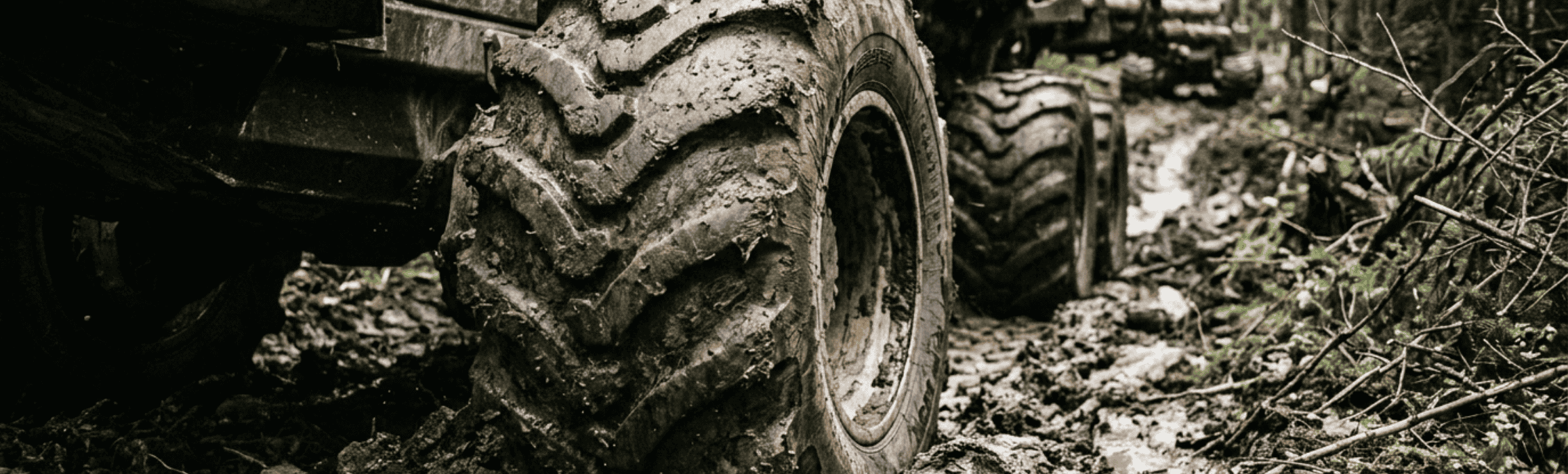
Table of Contents
- About CEAT Specialty Tyres
- What are the best tyres for forestry equipment?
- What Features Make CEAT Specialty Tyres Ideal for Severe Forestry Conditions?
- Why are Logger XL and Forest XL the Best Forestry Tyres ?
- Radial vs Bias Logging Tyres: Which Is Best for Your Equipment?
- Final Thoughts: How to Select the Best Forestry Tyres for Your Terrain
About CEAT Specialty Tyres
CEAT Specialty tyres houses a team of industry professionals dedicated to publishing accurate, well-researched, and practical content on agricultural and OTR tyres. Our editorial team reviews every article for accuracy, clarity, and relevance, using trusted sources and current industry best practices.
Operating skidders, forwarders and harvesters in extreme forestry environments requires specialised, high-durability rubber compounds. The best tyres for forestry equipment must deliver extreme puncture resistance, high load carrying capacity, superior mud traction and robust rim protection against hidden obstacles and debris.
High-performance options like CEAT Specialty tyres, specifically the Logger XL and Forest XL series, are engineered for harsh logging jobs. They combine heavy duty steel belted casings with cut resistant compounds to minimise costly downtime during operations.
Selecting the right logging tyre depends on machine weight, soil conditions and terrain steepness. Selecting between radial and bias ply construction ensures optimal traction and lateral stability while performing at demanding forestry sites.
What are the best tyres for forestry equipment?
The best tyres for forestry equipment are heavy-duty, steel-belted tyres built with cut-and-chip resistant compounds, deep lugs and reinforced sidewalls. CEAT Specialty forestry tyres (Logger XL for log skidders and Forest XL for harvesters/forwarders) lead the category in severe off-road conditions.
- Skidder Applications: Logger XL provides heavy-duty traction with a 23-degree deep tread angle and steel breakers.
- Harvester/Forwarder Applications: Forest XL utilises steel-belted construction and a wide lug profile for maximum stability.
- Construction Type: Bias tyres offer superior sidewall stiffness on steep slopes; radial tyres maximise footprint and traction on wet, soggy soil.
- Protection Features: Reinforced sidewall deflectors and dedicated rim guards protect against stub damage and bead slippage.
What Features Make CEAT Specialty Tyres Ideal for Severe Forestry Conditions?
CEAT Specialty forestry tyres are engineered to withstand severe impacts, jagged tree stumps and heavy payloads. Eventual tyre failure can impact profitability as forestry machinery operates under high torque and demanding cycles.
Key engineering features include:
- Steel-Belted Protection: Multiple steel breakers layered beneath the tread absorb sharp impacts and prevent tread punctures.
- Thick Sidewall Deflectors: Heavy sidewalls shield against lateral impacts from rocks, debris and timber slash.
- Specially Formulated Rubber Compounds: Resistant to cuts, tearing and chunking in abrasive environments.
- Integrated Rim Protectors: Prevents debris from forcing into the bead area and guards against rim slippage.
Why are Logger XL and Forest XL the Best Forestry Tyres ?
The CEAT Specialty tyres like Logger XL and Forest XL fulfill distinct equipment roles within forestry operations. The Logger XL excels under high torque on log skidders, while Forest XL provides flotation and heavy load capacity for harvesters and forwarders.
The table below outlines their core technical specifications and best-use cases:
| Feature / Spec | Logger XL | Forest XL |
Primary Machine | Log Skidders | Harvesters & Forwarders |
Tread Angle / Design | 23° Directional Deep Tread | Broad, Robust Lugs with Center Tie Bar |
Internal Casing | Multi-layer Nylon + Steel Breakers | Steel-Belted Reinforced Casing |
Key Advantage | High pull power & self-cleaning in deep mud | Large footprint, high stability & track compatible |
Radial vs Bias Logging Tyres: Which Is Best for Your Equipment?
Selecting between radial and bias logging tyres depends on the terrain you operate, machinery weight and ground moisture levels. Both construction types present different and unique operational advantages.
Bias Logging Tyres
Bias ply tyres feature cross-layered nylon cords running diagonally from bead to bead.
- Pros: Sturdy sidewalls provide superior lateral stability on steep slopes and uneven ground. Highly resistant to sidewall cuts.
- Best For: Heavy log skidders working on rocky or steep terrain.
Radial Logging Tyres
Radial tyres feature plies running at 90 degrees to the direction of travel, stabilised by steel belts.
- Pros: Flexible sidewalls create a wider, longer contact patch. This improves traction, reduces fuel consumption and limits soil rutting.
- Best For: Forwarders and harvesters operating on soggy, soft forestry ground.
Final Thoughts: How to Select the Best Forestry Tyres for Your Terrain
Choosing the correct tyre requires matching equipment type, soil conditions and payload demands to tyre specifications.
1. Assess Primary Terrain Type: Use deep lug, self-cleaning tyres like the Logger XL for muddy terrain. Use wide-footprint tyres like the Forest XL for soft, peat-heavy soil.
2. Verify Ply Rating and Load Index: Ensure the ply rating meets or exceeds your maximum timber payload capacity.
3. Determine Track Compatibility: If using tracks on forwarders or harvesters, choose tyres with reinforced shoulder lugs designed to prevent rim slippage and support track fitment.
4. Check Inflation Pressure Management: Maintain manufacturer-recommended inflation pressures to avoid bead slipping and rim damage under heavy pulls.


