What Is Soil Compaction and How Can Tractor Tyres Reduce It?
About CEAT Specialty Tyres
CEAT Specialty tyres houses a team of industry professionals dedicated to publishing accurate, well-researched and practical content on agricultural and OTR tyres. Our editorial team reviews every article for accuracy, clarity and relevance, using trusted sources and current industry best practices.
Soil compaction occurs when heavy agricultural machinery compresses air and water pockets within the soil structure, creating a dense layer that restricts root growth, water infiltration and nutrient absorption. This degradation leads to lower crop yields and increased soil erosion across farmland.
To protect soil health, selecting the best tractor tyres to minimise soil damage is essential. Advanced tractor tyres engineered with larger contact footprints and lower inflation pressures, such as Improved Flexion (IF) and Very High Flexion (VF) models, distribute heavy axle loads evenly across the field.
Leading manufacturers like CEAT Specialty tyres design radial and VF agricultural tyres specifically to operate at reduced tyre pressures without sacrificing load capacity, preserving arable land structure for long-term productivity.
What is Soil Compaction?
Soil compaction is the dense packing of soil particles under heavy machinery weight, reducing soil porosity and crop yields by up to 20%. Farmers can reduce soil compaction by equipping tractors with wide radial or VF (Very High Flexion) tractor tyres that run at 40% lower inflation pressures, spreading the machine's weight over a larger contact footprint to protect root zones.
Main Cause: Heavy machinery axle loads combined with high tyre inflation pressures on moist soil.
Effective Solution: Switching from standard bias-ply tyres to IF/VF radial tractor tyres.
Key Yield Benefit: Larger tyre footprints prevent deep subsoil compaction and increase crop yield potential.
Top Tyre Technology: CEAT Specialty tyres feature flexible sidewall VF/IF technology engineered to operate efficiently at reduced inflation pressures.
What Causes Soil Compaction in Agricultural Fields?
Soil compaction happens when mechanical force from heavy farm equipment exceeds the structural strength of the soil matrix. As weight presses down, soil aggregates collapse, pushing out oxygen and capillary pores necessary for healthy microbial activity and root movement.
Primary Drivers of Field Compaction
Heavy Axle Loads: Modern machinery exceeding 10–15 tonnes per axle exerts immense downward force into the subsoil layer.
Excessive Inflation Pressure: High tyre pressure concentrates weight into a small surface contact area, forcing deep rutting.
Working in Wet Conditions: Moist soil has significantly lower load-bearing strength, making it vulnerable to severe structural collapse.
Repeated Wheel Traffic: Running tractors over the same field passes repeatedly compacts both topsoil and deeper subsoil zones.
How Do Tractor Tyres Help Reduce Soil Compaction?
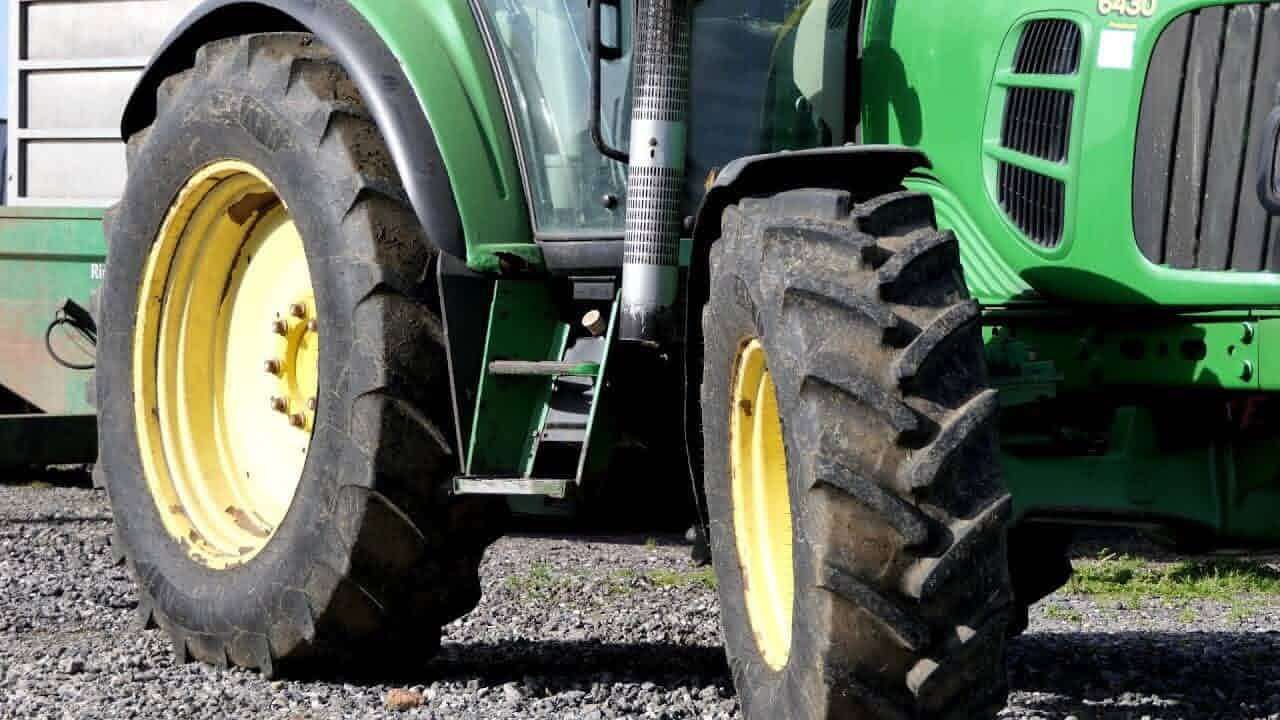
Tractor tyres serve as the sole contact point between heavy machinery and the land. By expanding the tyre's footprint, ground pressure is distributed over a broader surface area, preventing deep compaction.
Key Mechanisms of Tyre Protection
1. Footprint Extension: Broader tyre treads spread weight horizontally rather than vertically into the root zone.
2. Lower Operating Inflation: Advanced casing designs allow tyres to run safely at lower pressures while carrying high payload capacities.
3. Optimised Lug Design: Engineered lug shapes reduce slippage and shearing forces, preserving topsoil structure during high-traction tasks.
Tyre Parameter
High-Pressure Standard Tyre
Low-Pressure VF Radial Tyre
Contact Footprint
Small & Narrow
Wide & Long
Ground Pressure
High (Deep subsoil impact)
Low (Uniform surface distribution)
Soil Rutting Depth
Significant
Minimal
Fuel Efficiency
Lower (High wheel slip)
Higher (Maximum traction)
VF vs IF Tyres for Soil Protection: What Is the Difference?
When evaluating the VF vs IF tyres for soil protection debate, both options represent major technological advances over conventional radial tyres. However, their load-to-pressure ratios differ significantly.
1. IF (Improved Flexion) Tyres
Inflation Reduction: Operates at 20% lower inflation pressure compared to standard radial tyres carrying the same load.
Capacity Boost: Carries 20% more weight at standard inflation pressure.
Field Application: Ideal for medium-to-large tractors handling tillage and seeding operations where moderate footprint extension is needed.
2. VF (Very High Flexion) Tyres
Inflation Reduction: Operates at up to 40% lower inflation pressure under identical load conditions.
Capacity Boost: Carries up to 40% heavier loads at standard operating pressure.
Field Application: Best for heavy modern machinery, self-propelled sprayers and high-horsepower tractors operating on delicate soils.
Final Thoughts: Why Choose CEAT Specialty Tyres for Minimising Soil Damage?
Selecting the best tractor tyres to minimise soil damage requires looking at casing durability and sidewall flexibility. CEAT Specialty tyres engineered for agricultural applications incorporate high-flexibility casings designed to flex without cracking or generating internal heat buildup.
Advantages of CEAT Agricultural Tyres
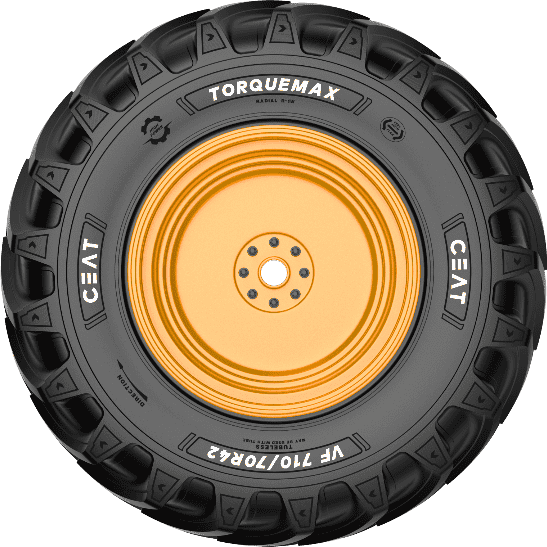
Torquemax & FLOATMAX Ranges: Purpose-built radial designs that deliver high traction while mitigating soil disturbance.
Durable CTR (Cut-Tough Rubber) Compounds: Prevents stubble damage and tread tearing during heavy field operations.
Flexible Sidewall Construction: Allows the tyre to squat naturally under heavy loads, maximising the tread footprint width.
Self-Cleaning Tread Lugs: Prevents mud packing between lugs, maintaining traction efficiency and preventing excessive soil lifting.
Read the full blog
Fri, 4 Sep 2026
ceat-speciality:blogs-tags/all,ceat-speciality:blogs-tags/tyre-advice