ceat-speciality:blogs-tags/all,ceat-speciality:blogs-tags/agriculture
How Farmers Can Safeguard Crops During Cyclones
Wed, 12 Nov 2025 | PRODUCTS


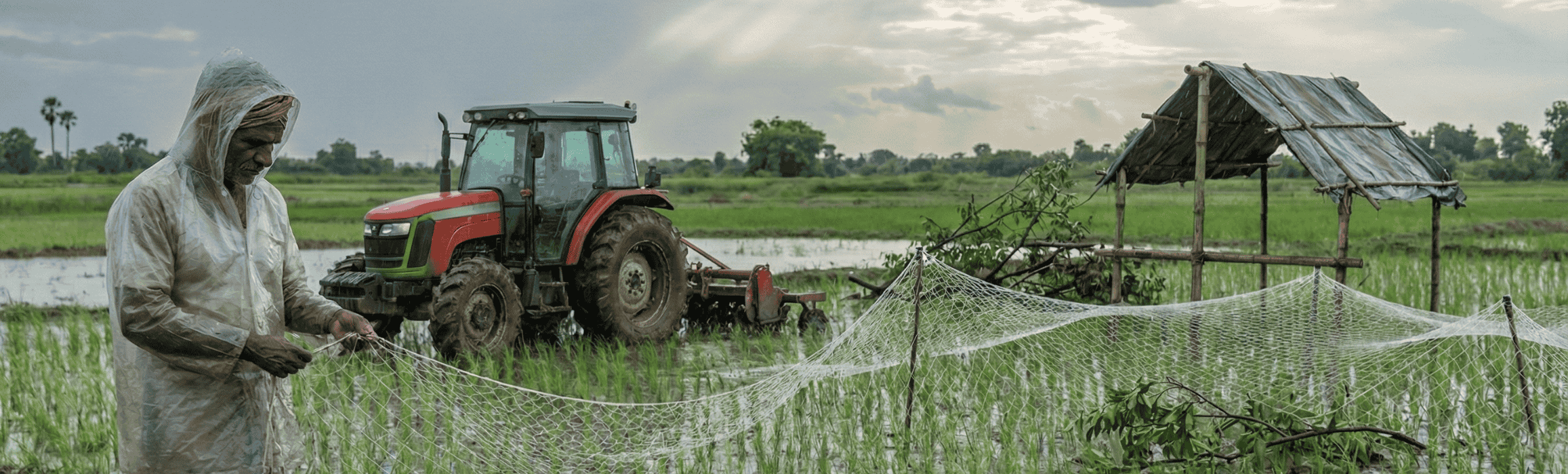
If we talk about the most destructive natural disasters, cyclones are certainly among those that farmers fear the most. Cyclones bring heavy rains, strong gusts of wind, and floods that devastate farmlands and reduce yields. Climate change is a major concern today, leading to more frequent and intense weather events. Hence, it is crucial for farmers to take important steps to protect their livelihoods.
Taking proper precautions and using the right equipment can safeguard crops during calamities like cyclones. Here’s how farmers can protect their yield with reliable tools like CEAT Specialty farm tyres, which play an instrumental role in preparing for such disasters.
Proactive Planning and Staying Informed
To prepare for a cyclone, farmers must be proactive and plan well in advance. Understanding climate patterns and staying updated with weather forecasts and warnings issued by local authorities are essential. Early alerts give farmers time to harvest mature crops, move livestock to safer areas, and secure farm property. It is ideal for farmers to have an emergency plan that includes evacuation routes, backup power sources, and equipment safety measures.
Machinery and vehicles should be kept in excellent working condition. Tractors, harvesters, and other equipment fitted with reliable farm tyres should be able to navigate muddy or flooded terrain. This level of reliability becomes crucial when quick action is needed to protect crops before a cyclone.
Reinforcing Infrastructure
To prepare for cyclones, farmers should inspect their storage units, fields, and greenhouses for structural integrity. To reduce potential damage, reinforce roofs, secure irrigation systems, and clean drainage channels. Another useful tip is to use windbreaks, such as tall trees or artificial barriers, to protect crops from direct wind impact.
Farm vehicles and equipment also require attention. By using precision-engineered CEAT Specialty farm tyres, vehicles gain better grip and stability to navigate post-cyclone terrain. These tyres are designed to offer a firm hold and steady performance, even in slippery conditions.
The roadability of CEAT Specialty farm tyres is recommended to farmers when dealing with terrain conditions after a cyclone.
Protecting Crops and Soil
The aftermath of a cyclone often includes waterlogging and soil erosion, both of which can damage plant roots and deplete essential nutrients. Farmers should implement soil management techniques such as raised beds, contour bunding, and mulching. These practices help prevent soil degradation and maintain fertility.
Root rot can be avoided by draining excess water quickly after a cyclone. This becomes possible with the help of reliable farm tyres that allow machinery to move effectively across wet terrain, enabling farmers to take timely recovery measures.
Recovering from the Cyclone
After a cyclone, farmers should assess the damage carefully and plan recovery activities. Check for debris, inspect machinery, and identify areas that require replanting or soil treatment. These proactive steps can help reduce long-term losses.
With CEAT Specialty farm tyres, recovery work can resume faster. These tyres provide excellent traction and load-bearing capacity, making post-cyclone field operations more efficient. They enable easy navigation across soaked ground, helping farmers reorganize and restore their fields quickly. Regular maintenance of the farm tyres can help in quick adaptability post a cyclone.
To conclude our thoughts
Cyclones are inevitable, and so is their impact on farms. However, farmers can work proactively to minimize this impact through planning, preparedness, resilience, and the use of reliable farming equipment. Investing in dependable tools like CEAT Specialty farm tyres can help farmers navigate the challenging post-cyclone period. With the right strategies, planning, and robust equipment, farmers can recover efficiently and safeguard their livelihoods.