


ceat-speciality:blogs-tags/all,ceat-speciality:blogs-tags/construction-&-industrial
Signs That Indicate Your OTR Tyres Need Replacement
Thu, 13 Nov 2025 | PRODUCTS


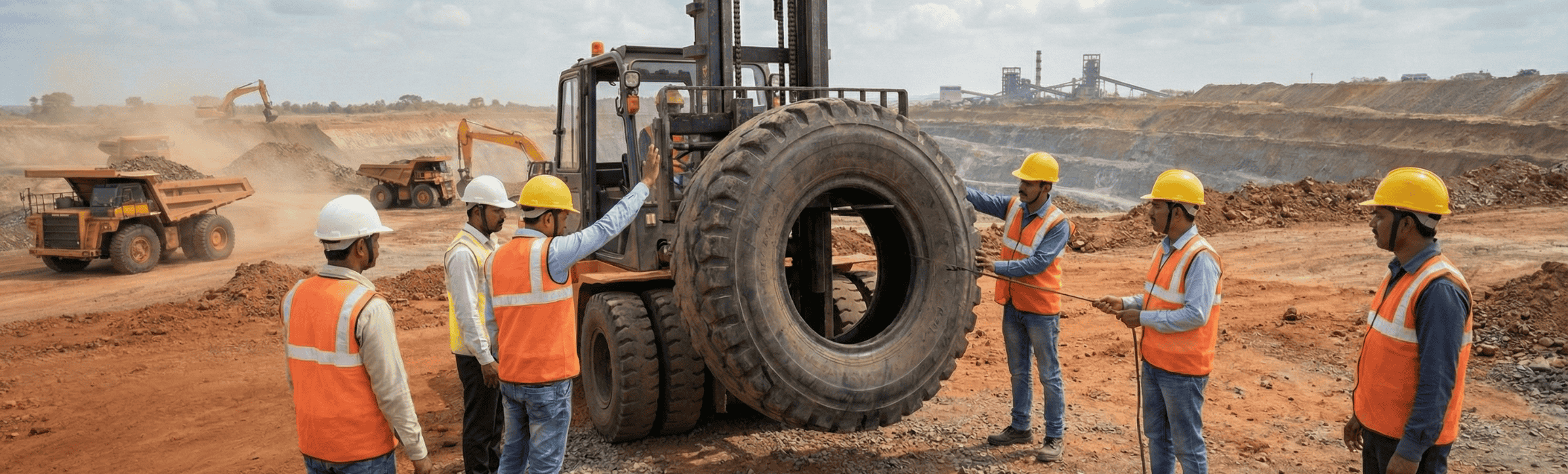
Off the road (OTR) vehicles are highly efficient when it comes to navigating mining sites, construction zones, or agricultural fields. These OTR tyres play a crucial role in bearing immense loads under demanding conditions. Designed for precision and heavy-duty handling, off the road tyres are built for long-lasting performance.
However, due to their robust usage, these tyres must be inspected regularly for early signs of wear and damage. Many factors can contribute to the wearing of OTR tyres, and recognizing these signs early is essential. Let’s take a look at some key indicators that your OTR tyres may need replacement and why CEAT Specialty tyres are the preferred choice among customers.
1. Wear on Tread Depth / Tread Bar
Before inspecting your OTR tyre for any damage, start by checking the condition of the tread pattern. The tread is a clear indicator of whether your OTR tyre needs to be replaced. Since tread patterns are the first part of the tyre to come into contact with the surface, they need to provide essential traction and stability.
If the tread bar has worn down by more than 10% from its original height, its efficiency and grip are significantly affected. Regular checks ensure that the integrity of your off the road tyres is maintained and help you decide when a replacement is needed.
2. Damaged Sidewall
The tread patterns and sidewalls of construction tyres are designed to withstand heavy-duty tasks such as ploughing and subsoiling. However, debris such as stones or flints can damage the sidewalls of OTR tyres. During high-intensity operations, sections of rubber may even detach from the tyre. Inspect the extent of any sidewall damage carefully, and consider replacing the tyres to ensure optimal performance and better fuel efficiency.
CEAT Specialty tyres offer an extended lifespan with a sturdy tread design engineered to perform in challenging terrains, providing excellent grip and surface stability.
3. Depletion of Rubber Compound
Most construction tyres come with a warranty, but regular inspection remains essential. Monitoring the tyre pressure is key to maintaining OTR tyre health. Low tyre pressure can accelerate the depletion of the rubber compound, making off the road tyres more susceptible to penetration by sharp objects and increasing the risk of punctures. Be sure to inspect the sidewalls of your OTR tyres for such issues.
With CEAT Specialty tyres, the high-grade rubber compound and robust construction make them an ideal choice for long-lasting, productive operations.
4. Ageing of OTR Tyres
Just like any other equipment, tyres perform best within their intended service life. If your construction tyres have exceeded their recommended usage period and no longer provide balanced performance, they are no longer fit for safe or efficient use. Using off the road tyres beyond their lifespan can lead to frequent maintenance needs, higher operational costs, and reduced productivity.
CEAT Specialty OTR tyres offer superior traction, performance stability, and longevity, ensuring extended usability and value for money.
Make sure to conduct thorough and regular inspections of your off the road tyres. The signs mentioned above will help you determine when to replace your OTR tyres. To maintain operational efficiency and safety, invest in CEAT Specialty tyres, engineered to enhance productivity, performance, and load-handling capacity.


.png)

