


ceat-speciality:blogs-tags/all,ceat-speciality:blogs-tags/technology
Winter Soil Health: How CEAT Specialty VF Low Compaction Tyres Help
Tue, 23 Dec 2025 | PRODUCTS


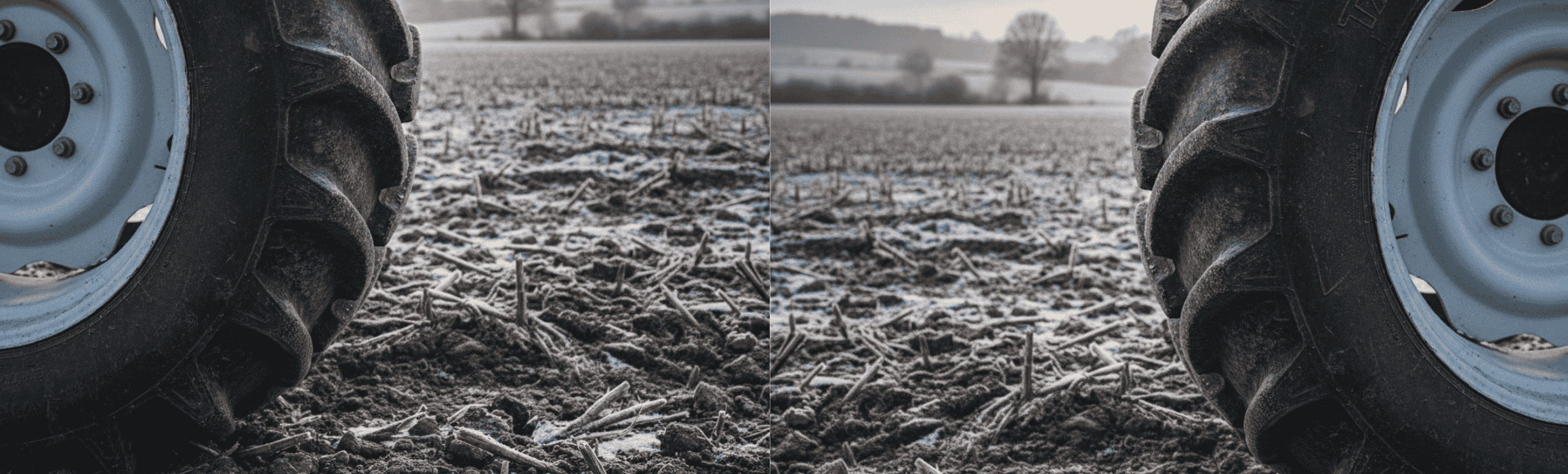
Winter is a critical yet often overlooked season for soil health. While crops may be dormant, the soil beneath remains active and vulnerable. Excess moisture, freezing and thawing cycles, and heavy machinery traffic can lead to soil compaction. It is one of the biggest threats to long-term farm productivity. Choosing the right farm tyres during winter operations can make a significant difference, and this is where CEAT Specialty tyres, particularly VF (Very High Flexion) low-compaction tyres, play a vital role.
Why Winter Soil Health Matters
Healthy soil structure allows roots to grow freely, water to infiltrate effectively, and beneficial microorganisms to thrive. During winter, wet and soft soil is especially prone to compaction from tractors, spreaders, and other farm equipment. Once compacted, soil can restrict root development, reduce oxygen availability, which leads to limited nutrient uptake in the following growing season. The effects may not be immediately visible, but they often result in lower yields and expensive input costs.
The Role of Farm Tyres in Soil Protection
Traditional tyres exert higher ground pressure, especially when operating on wet winter fields. This pressure compresses soil particles, reducing pore space and damaging soil structure. Modern farm tyres, especially by CEAT Specialty tyres in VF technology, are designed not just for traction and durability, but also to minimise their impact on the soil.
CEAT Specialty tyres are engineered with advanced technology to address these challenges. Their VF low-compaction designs allow farmers to operate efficiently while protecting soil health, even in demanding winter conditions.
How CEAT Specialty VF Tyres Help
CEAT Specialty VF tyres are designed to carry the same load as standard farm tyres at significantly lower inflation pressures. This lower pressure increases the tyre’s footprint, distributing the machine’s weight more evenly across the soil surface. The result is reduced ground pressure and less soil compaction.
During winter operations such as manure spreading or field transport, CEAT VF tyres help maintain soil structure by preventing deep ruts and minimising damage to wet fields. This not only preserves soil health but also reduces the need for costly remedial tillage in spring.
Benefits of CEAT Specialty Low-Compaction Tyres
VF Low-compaction tyres from CEAT Specialty are specifically developed to balance load capacity, traction, and soil protection. Their optimised tread patterns provide excellent grip on slippery winter terrain while minimising slippage, which is another contributor to soil damage.
By reducing wheel slip and distributing weight more evenly, these farm tyres help maintain a stable soil surface. This is particularly important in winter, when repeated passes over the same area can quickly degrade soil quality.
Long-Term Gains for Farmers
Investing in the right farm tyres is not just about short-term performance, it’s about long-term sustainability. By using CEAT Specialty VF low-compaction tyres, farmers can protect their soil during winter, improve field accessibility, and set the foundation for healthier crops in the next growing season.
In an era where sustainable farming and soil conservation are more important than ever, CEAT Specialty tyres offer a smart, practical solution. Protecting soil in winter means stronger yields in the future and the right farm tyres can make all the difference.


