


ceat-speciality:blogs-tags/all,ceat-speciality:blogs-tags/tyre-advice
The Right Tyre for Every Spraying Operation
Wed, 26 Nov 2025 | PRODUCTS


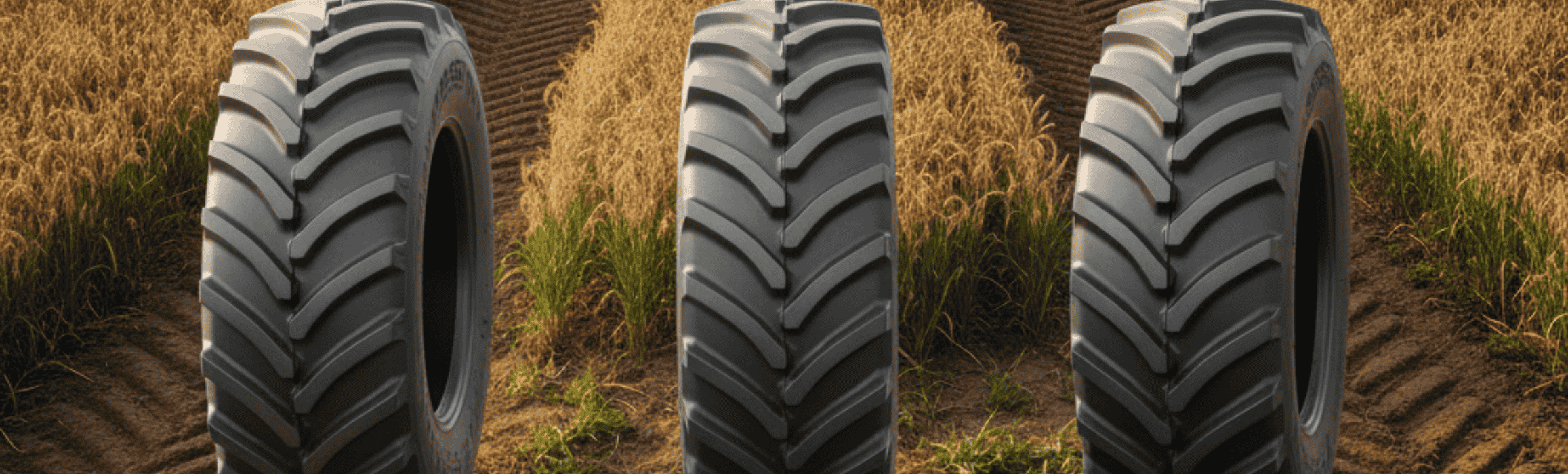
In any spraying operation, the tyres on your equipment do more than just roll around the field. They affect how much pressure is placed on the ground, how evenly loads are carried, how much damage is done to seedlings or mature crops, and ultimately how your yield performs. If you’re running a mounted sprayer, a trailing or a self-propelled unit, choosing the correct tyre design—width, height, tread pattern, load capacity—makes a real difference.
In this blog we’ll walk through the specific tyre considerations for each of the three main sprayer types and show how CEAT Specialty with the Spraymax line gives practical solutions. Let’s get started.
Tyres for Mounted Sprayers
Key constraints and issues
Mounted sprayers are attached to a tractor (often to the rear). That configuration places excessive load on the rear axle of the tractor. What happens? The heavy tank, boom, and spray system concentrate weight over the rear tyres and the soil immediately behind the tractor. This can lead to soil compaction, which damages seedlings and root development—and as roots struggle, so does yield.
Solutions
Load balancing: To reduce that rear overload, adding a front tank or front ballast can help spread weight more evenly across all tyres. That means the tractor’s front tyres carry more of the load, so the rear doesn’t sink or compact the soil as much.
Tyre selection:
Choose tall, narrow tyres. These support greater loads at moderate tyre pressure, preserving soil structure and protecting crop rows. The CEAT Specialty Spraymax tyre brings features like a stepped lug design for improved grip and a centre tie bar for better road-stability. Because mounted sprayers often operate after planting, you want tyres that minimise damage to the crop canopy and to the soil between the rows.
Benefit recap: Less compaction, better root growth, safer seedling environment → ultimately a healthier crop.
Tyres for Trailed Sprayers
Configuration advantages
Trailed sprayers (pulled behind the tractor) are common for large-capacity tasks: big tank volumes (up to 8,000 L) and wide boom arms (up to 50 m) allow fewer field passes, which saves time and fuel. But with those advantages come specific tyre demands.
Tyre considerations
Both the tractor and implement tyres should be narrow and tall. Why? The narrower footprint reduces crop damage, while the tall profile supports heavier loads without excessive pressure.
Load is shared: the implement carries part of the weight, and the tractor’s rear axle shares the rest, so stability is improved compared to an overloaded rear axle alone.
With CEAT Specialty’s Spraymax tyre, you get:
- Rounded shoulders (less damage to soil and crops)
- Higher Non-Skid Depth (NSD) for longer tyre life
- Durable construction built for cyclic loads (tanks emptying while spraying)
Benefit recap: The right tyre helps manage heavy and changing loads—less crop damage, longer tyre life, fewer interruptions.
Tyres for Self-Propelled Sprayers
Design and benefits
Self-propelled sprayers are built specifically for spraying. They often offer higher ground clearance and a central tank location (for better weight distribution) and are designed to minimise soil compaction and crop damage. This allows use at multiple crop growth stages without having to worry as much about damaging the crop.
Tyre choice
Again: narrow, tall tyres. That helps the machine move easily through crop rows without harming plants.
For example, CEAT Specialty’s Spraymax VF tyre offers:
- VF (Very High Flexion) technology – carries up to 40% more load than a standard radial or the same load at 40% less pressure.
- Advanced lug geometry and stepped lugs for better grip and roadability.
- Rounded shoulders to protect crops and minimise soil damage.
- These tyres give you the flexibility to carry heavier loads, spray more efficiently, and reduce soil impact even when the tank is full.
Benefit recap: The right tyre lets the self-propelled sprayer do its job better—higher loads, lower soil damage, better results.


