


ceat-speciality:blogs-tags/all,ceat-speciality:blogs-tags/construction-&-industrial
How Does the MPT 808 Deliver Reliable Performance in Harsh Industrial Environments?
Fri, 17 Jul 2026 | PRODUCTS


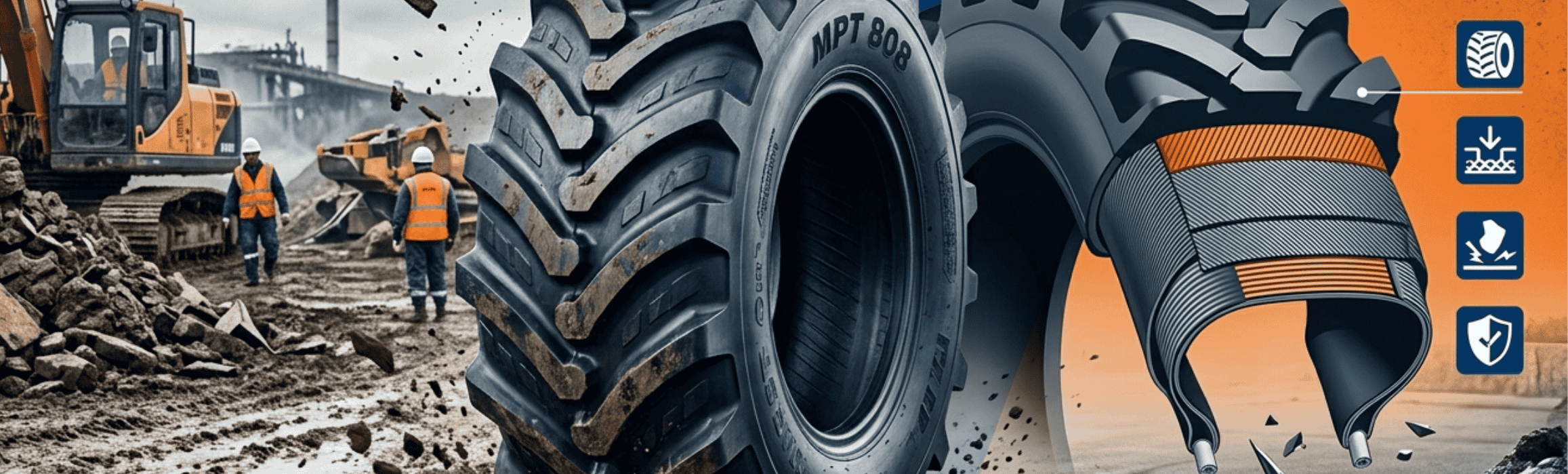
Table of Contents
- Why Is the MPT 808 Tread Design Effective for Drive Wheel Applications?
- How Does the Nylon Carcass Construction Improve Industrial Tyre Stability?
- What Role Does the Compound Play in Resisting Harsh Industrial Conditions?
- How Does the MPT 808 Support Dual Field and Road Transport Applications?
- What Sizes Are Available for CEAT Specialty MPT 808 Tyres?
- CEAT Specialty MPT 808 Tyre Size Guide: Understanding the Size Markings
The MPT 808 engineered by CEAT Specialty tyres delivers reliable performance in harsh industrial environments through a combination of heavy-duty structural engineering, specialised rubber compounding, and an optimised tread design. Built specifically for demanding drive wheel applications, this tyre withstands extreme mechanical stress, resists physical punctures, and maintains stability on both unstable field terrain and abrasive paved roads.
Industrial operators and machinery dealers require equipment that minimises downtime. The MPT 808 meets this demand by integrating three core design elements: a wide diagonal lug pattern for maximum traction, a reinforced nylon carcass for structural integrity under heavy loads, and an advanced tread compound engineered to prevent physical degradation.
The CEAT Specialty MPT 808 ensures reliable performance in harsh industrial environments by preventing punctures, maintaining high traction, and resisting tread cracking under heavy loads.
Key Technical Takeaways:
- Enhanced Traction: Features a wide diagonal lug design optimised for drive wheel applications.
- Structural Stability: Built with a strong nylon carcass construction to handle extreme weight and impact.
- Damage Resistance: Formulated with a superior tread compound that resists tearing, chunking, and cracking.
- Versatile Application: Engineered for seamless performance across both field work and road transport.
Why Is the MPT 808 Tread Design Effective for Drive Wheel Applications?
The MPT 808 utilises a wide diagonal lug design that optimises surface contact and power distribution for industrial drive wheels. This aggressive tread pattern ensures that machinery maintains consistent forward momentum without slipping, even when operating on loose soil, mud, debris, or wet concrete.
H3 Traction and Performance Capabilities:
- Self-Cleaning Lugs: The diagonal orientation allows the tyre to shed mud and debris automatically during rotation, preventing loss of traction.
- High Torque Transfer: The wide profile maximises the footprint, allowing industrial machinery to transfer high torque efficiently to the ground surface.
- Reduced Slippage: Superior grip limits wheel spin, which directly reduces fuel consumption and accelerates project timelines.
How Does the Nylon Carcass Construction Improve Industrial Tyre Stability?
Harsh environment industrial tyres must support massive machine weights while navigating uneven terrain. The MPT 808 incorporates a strong nylon carcass construction that provides the necessary tensile strength to resist internal bruising, casing distortion, and sudden impact failures.
for industrial operations ensures durability in harsh conditions
CEAT Specialty MPT 808 Industrial Tyre’s Benefits
| Technical Attribute | Benefit to Industrial Operations |
High Tensile Strength | Prevents tyre deformation under maximum load capacities. |
Impact Absorption | Resists bruising from sharp rocks, debris, and potholes. |
Sidewall Rigidity | Enhances lateral stability during heavy lifting and turning operations. |
This reinforced internal architecture ensures that the tyre carcass remains stable, extending the overall lifecycle of the tyre and providing a safe operating platform for heavy machinery.
What Role Does the Compound Play in Resisting Harsh Industrial Conditions?
Industrial work sites expose tyres to sharp materials, chemical hazards, and abrasive surfaces. The MPT 808 industrial tyre is manufactured using a superior tread compound specifically formulated to combat these environmental hazards. Utilising the correct tyre for industrial operations ensures durability in harsh conditions
Key Protective Properties:
- Tear Resistance: Prevents deep gouges and chunking when driving over sharp metal, stone, or concrete edges.
- Anti-Cracking Properties: Resists ozone degradation and thermal stress, preventing surface cracking over prolonged outdoor exposure.
- Slow Wear Rate: The specialised rubber chemistry reduces abrasive wear on asphalt, lowering the total cost of ownership for fleet managers.
How Does the MPT 808 Support Dual Field and Road Transport Applications?
Many industrial and construction operations require vehicles to move between unpaved job sites and public paved roads. The MPT 808 is engineered as a multi-purpose tyre (MPT) that transitions seamlessly between these distinct environments without sacrificing performance or safety.
Dual-Environment Optimisation:
1. On the Field: The deep, wide diagonal lugs bite into soft ground, preventing the vehicle from bogging down in mud or loose gravel.
2. On the Road: The balanced center alignment of the tread pattern reduces vibration, lowers heat buildup, and ensures a smooth ride at transport speeds.
3. Fleet Efficiency: Eliminates the need to switch tyres or utilise secondary transport vehicles to move machinery between sites.
What Sizes Are Available for CEAT Specialty MPT 808 Tyres?
The CEAT Specialty MPT 808 tyre is available in multiple sizes to suit a wide range of agricultural, industrial, and material-handling applications. Designed for versatility, durability, and reliable performance across mixed terrains, the MPT 808 range offers options compatible with various machinery and equipment requirements.
CEAT Specialty MPT 808 Tyre Size Guide: Understanding the Size Markings
| Tyre Size | What the Numbers Mean |
10.0/75-15.3 | 10.0 = Tyre width in inches, 75 = Aspect ratio (sidewall height is 75% of tyre width), 15.3 = Rim diameter in inches. |
10.5-18 | 10.5 = Tyre width in inches, 18 = Rim diameter in inches. The dash (-) indicates a conventional tyre size format where aspect ratio is not specified. |
10.5-20 | 10.5 = Tyre width in inches, 20 = Rim diameter in inches. Aspect ratio is not specified in this traditional sizing format. |
11.5/80-15.3 | 11.5 = Tyre width in inches, 80 = Aspect ratio (sidewall height is 80% of tyre width), 15.3 = Rim diameter in inches. |
12.0/75-18 (300/75-18) | 12.0 inches (300 mm) = Tyre width, 75 = Aspect ratio, 18 = Rim diameter in inches. Both measurements represent the same tyre width in different units (imperial and metric). |
Key Terms Explained:
- Tyre Width: The width of the tyre from sidewall to sidewall.
- Aspect Ratio: The sidewall height expressed as a percentage of the tyre width.
- Rim Diameter: The diameter of the wheel rim the tyre is designed to fit.
- Dash (-) Format: An older tyre sizing convention where the aspect ratio is generally not stated and is assumed based on industry standards.


.png)


