ceat-speciality:blogs-tags/all,ceat-speciality:blogs-tags/tyre-care
Tractor Tyre Alignment: A 3-Step Parallelism Check
Thu, 27 Nov 2025 | PRODUCTS


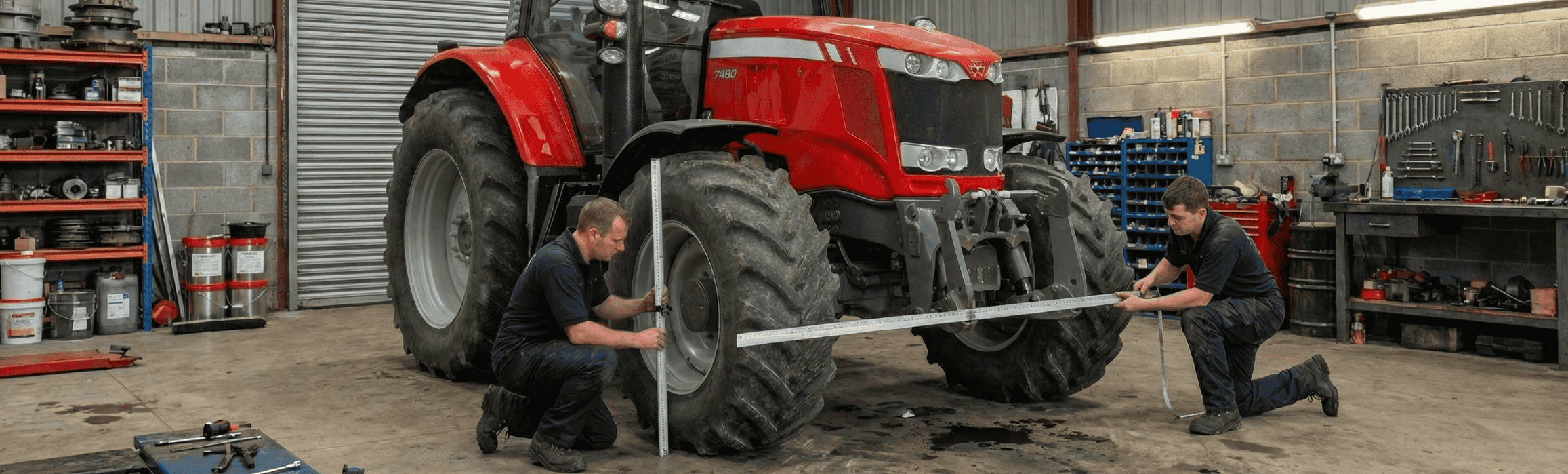
The wear of your tractor tyre can be affected if the front wheels of a conventionally steered tractor are not correctly aligned. If alignment is not checked, the perfect parallelism of the tractor tyre can become irregular. This affects the tractor’s performance and may impact overall productivity. This guide will help you understand and confidently self check the alignment to ensure consistent productivity.
One of the most common issues tractor tyres face is incorrectly adjusted front wheel tracking. If not checked in time, the tyres may wear irregularly across their profile, leading to steering difficulties. This results in reduced grip in the field, affects braking capacity, and directly impacts fuel efficiency. Ultimately, this can cause premature replacement of front tractor tyres.
At CEAT Specialty Tractor Tyres, we believe that tyres should perform optimally from the start. The alignment of the tyre must remain balanced, parallel, and provide a friction-free experience. By upgrading to the CEAT Specialty tractor tyre range, you can get the most out of your tyres in terms of grip, pulling power, lower compaction, greater fuel efficiency, and better road handling.
Let’s take a look at a quick 3-step check to fix your tractor tyre alignment and maintain tyre parallelism:
1. Be Sure to Check and Measure the Wheel Alignment
- Start by measuring the distance between the front and rear edges of the front tractor tyres on the same axle.'
- Ensure the measurements show a slight “toe-out,” meaning a slightly greater distance between the front edges. Ideally, the measurements between the front edges should be nearly identical.
- Upon inspection, if the tractor tyres are not parallel and lack the correct “toe-out,” an alignment adjustment is required.
2. For Proper Alignment, Adjust the Track Rod
- Before you start, kindly consult the operator’s manual for your specific CEAT Specialty tractor tyre model.
- Loosen the self-locking nuts at the ends of the track rod. Then apply pressure to prevent the ball bearing beneath the nut from rotating.
- Adjust the length of the track rod end as required by screwing it in or out.
- These repositionings ensure that the front tractor tyres are parallel or have a slight toe-out relative to each other.
- Once the rod end adjustment is correct, reinsert the track rod.
3. Ensure Re-securing Components and Replace Self-locking Nuts
- Due to the unreliable usability of their nylon inserts, replace the self-locking nuts after removal.
- To secure the track control rod firmly in place, tighten the locking nut.
- Be vigilant about checking tractor tyre alignment regularly, preferably a few times a year, to prevent uneven wear and maintain consistent performance.
Having correct and parallel alignment ensures smoother steering, extended tyre life, and reduced costs of replacing CEAT Specialty tractor tyres.
To conclude, maintaining parallelism in wheel alignment is vital for consistent performance and the longevity of your tractor tyres. Regularly measuring and adjusting the alignment ensures the tractor tyres remain parallel or have a near to perfect toe-out. Follow these quick and easy steps to ensure your CEAT Specialty tractor tyre helps you achieve smooth steering, minimised tyre wear, and optimised overall tractor performance.