ceat-speciality:blogs-tags/all,ceat-speciality:blogs-tags/tyre-care
Farm Tyre Wear Limits: Know When to Change Them
Thu, 4 Dec 2025 | PRODUCTS


It is widely accepted that one of the most underrated components of modern agriculture, responsible for generating efficiency, carrying heavy loads, and navigating rough terrains, is the farm tyre. These tyres ensure that machinery operates smoothly and help boost productivity across farming activities.
That being said, it is quite evident that farm tyres eventually wear out. Understanding farm tyre wear limits and knowing when to replace them are essential steps to maintain productivity and safety.
Let’s Learn Why Farm Tyre Wear Matters
Worn-out farm tyres can become “hefty liabilities” if not addressed at the right time. They compromise performance, efficiency, and the overall functioning of the machinery. Reduced tread depth leads to poor traction, making equipment prone to slippage. This also increases fuel consumption and causes soil compaction, which negatively affects crop health and yield.
Additionally, machinery fitted with worn-out tyres faces a higher risk of punctures and unexpected downtime during critical farming operations.
Hence, it’s advisable to monitor the condition of your farm tyres at regular intervals.
Farm Tyre Wear and Its Limitations
As the saying goes- everything must perish. Similarly, every farm tyre has its own wear limit, which becomes evident when the tread depth falls below a safe level. Various factors, such as frequency of usage, terrain type, and even tyre brand choice, can influence how quickly tyres wear out.
A brand-new CEAT Specialty farm tyre features deep treads engineered to provide excellent grip on both smooth and uneven ground. However, with time, these treads wear down due to friction and load pressure.
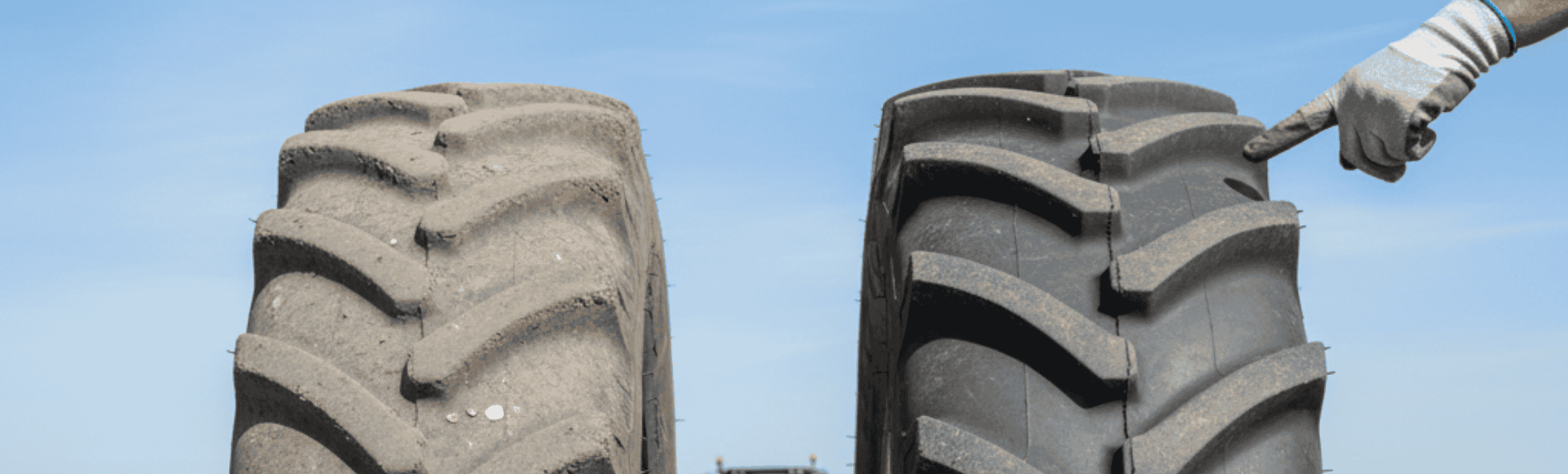
One effective way to monitor tread wear is by measuring and recording the remaining tread depth on your farm tyres. By doing this year after year, you can easily predict their remaining service life. If your equipment starts struggling to grip on wet or loose ground, it’s a clear sign that your farm tyres are nearing the end of their service life.
Warning Signs to Check Visually
Here are some visual and performance indicators that signal your farm tyres may need replacement:
- Uneven tread wear: Check whether one side of the farm tyre is more worn than the other. This may indicate misalignment or uneven load distribution.
- Indents or cuts in the sidewall: Exposure to chemicals, sunlight, or sharp debris can cause cracks or cuts in the sidewall, leading to potential blowouts.
- Reduced traction: If your farm tyre starts slipping or loses pulling power, it’s a clear indication of wear.
- Noise and vibrations: Worn-out tyres often cause excessive vibration and noise, making operations uncomfortable and inefficient.
By investing in CEAT Specialty farm tyre, you can easily assess the condition and service life of your farm tyres before making an informed decision.
Knowing When to Choose the Right Replacement
The factors that lead to farm tyre wear should encourage you to choose tyres that offer durability and long-lasting performance. CEAT Specialty farm tyres are designed and engineered to withstand demanding agricultural conditions.
CEAT Specialty farm tyre’s key features like superior tread design, excellent self-cleaning properties, and durable rubber compounds; ensure extended service life and reliable performance. Investing in high-quality farm tyres not only boosts your equipment’s efficiency but also helps reduce maintenance costs over time.
Final Thoughts
It may seem like farm tyre wear is a minor concern, but in reality, it greatly impacts the performance and productivity of your agricultural equipment. Regular inspection and timely replacement are wise practices to maintain optimal performance. Investing in trusted brands like CEAT Specialty farm tyres ensures smooth operations and a productive farming season, helping you reap the results that truly matter.