ceat-speciality:blogs-tags/all,ceat-speciality:blogs-tags/tyre-care
Maximising Productivity: The Essential Guide for Farm Tractor Tyres
Tue, 14 Apr 2026 | PRODUCTS


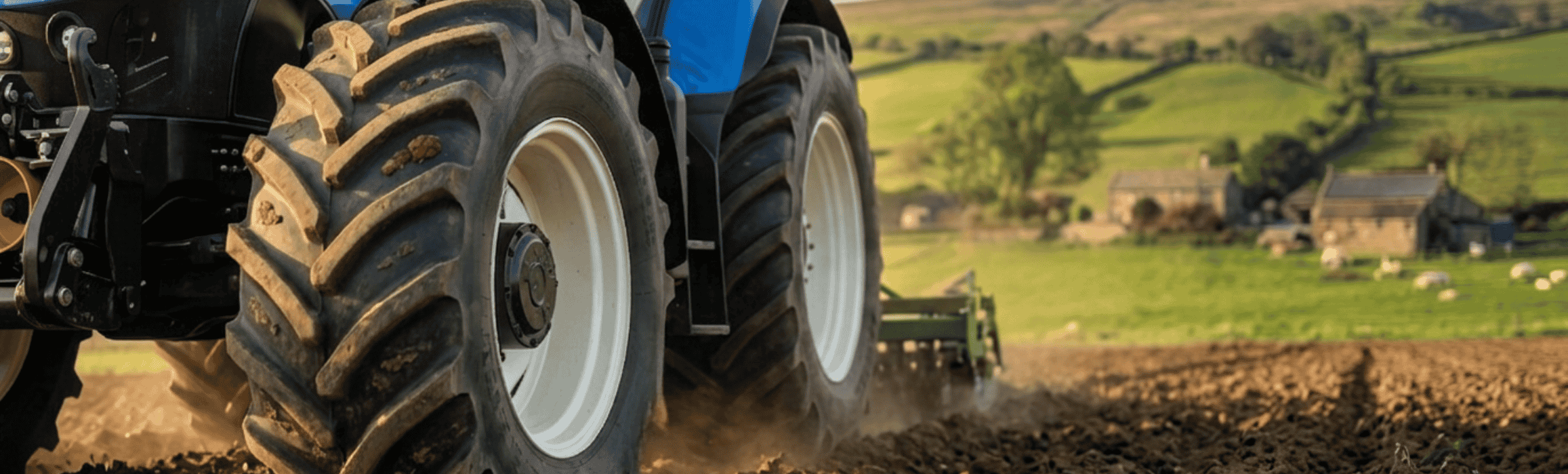
For farmers, the tractor is the undisputed backbone of the farm. But here’s the reality: tractors are only as effective as the few inches of tractor tyres that meet the surface. Proper tyre maintenance isn’t just a "to do" chore but it’s a direct lever for your fuel efficiency, the long-term soil health and your safety.
Whether you’re managing a family plot or a massive operation, knowing when to maintain a tractor tyre and when to invest on a new set is vital for your productive time on farms.
1. Your Maintenance Routine: Daily & Weekly
The damp climate and flint-heavy soils are extremely hard on the rubber material of your tractor tyres. To eliminate the signs of wear, keep these three areas in your farm routine:
- Pressure is Everything: Incorrect inflation is the main issue behind poor performance of tractor tyres. If the tyres are under-inflated, you’re burning extra fuel and wearing out the sidewalls; if they are over-inflated, you’re bouncing across the field and crushing soil’s integrity. Make a note to lower the pressure for field work to spread the load, and pump it up for hauling activities on road.
- Visual Inspections: Give your tyres a good wash after every agricultural activity. Look for cracks, deep cuts from stones or any suspicious bulges.
- Watch the Lugs: If you notice uneven wear on the lugs, it’s usually a sign of misalignment. If you spend a lot of time on uneven fields or roads, try rotating your front tyres to even out the tread loss.
2. Is it Time to Replace?
It’s usually human nature to push farm tractor tyres one more season till they are worn, but that often costs more in the long run.
- Tread Depth: When your tread hits that 20-25% mark, traction gets impacted. You’ll start seeing significant wheel slip, which basically means you’re burning extra fuel.
- Casing Health: If you can see the internal cords or notice severe cracking due to weather, then the tyre is a risk prone component.
- The Six-Year Rule: Tractor tyres aren’t immortal. Even if the tread looks good to go, the compounds degrade over time. If your tyre is over six years old, get a professional to give them a check every year.
3. Why Farmers are Moving to CEAT Specialty Tyres
- When the time finally comes to upgrade, many farmers are shifting toward CEAT Specialty tyres. They’ve built their reputation on optimising the tyres on the philosophy of balancing compaction, traction and roadability.
- Farm tractor tyres like the Farmax and Torquemax are designed with a higher lug overlap and rounded shoulders. This isn't just for design or the overall look; it’s specifically engineered to protect delicate and fertile soil from compaction while maintaining stability on the road.
- Investing in a brand like CEAT Specialty means you can haul heavy loads without feeling like you're ruining your fields for the next seasonal cycle.