ceat-speciality:blogs-tags/all,ceat-speciality:blogs-tags/products
Eleveta X3 vs. Eleveta Plus: A 2026 TCO Deep-Dive for High-Intensity Fleets
Mon, 18 May 2026 | PRODUCTS


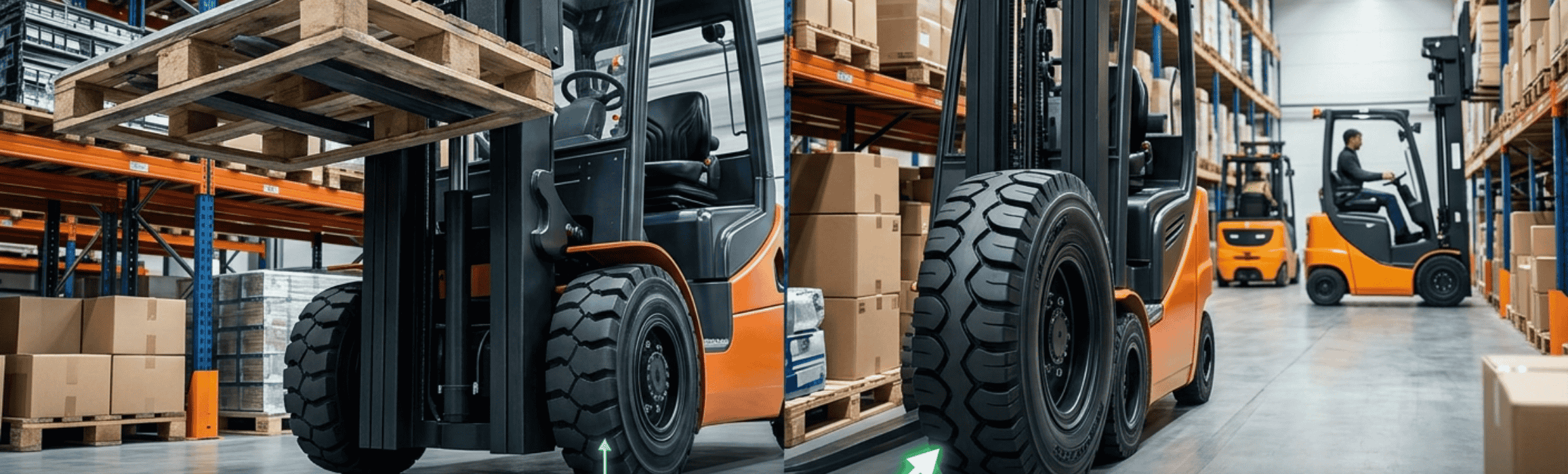
In 2026, managing the Total Cost of Ownership (TCO) for high-intensity material handling fleets requires selecting heavy-duty forklift tyres that balance initial procurement with long-term durability. CEAT Specialty tyres offer two primary solutions for demanding environments: the Eleveta X3 and the Eleveta Plus.
The primary difference lies in their tread architecture and application focus. The Eleveta X3 is engineered for maximum sidewall protection and rim safety in abrasive environments, while the Eleveta Plus prioritises load distribution and high-contact stability. For fleets operating 24/7, choosing between these models can impact annual tyre expenditure by up to 15%.
For high-intensity fleets, the Eleveta X3 is the superior choice for rugged, debris-heavy environments where sidewall damage is common. The Eleveta Plus is the optimal selection for high-capacity load-carrying on hard, concrete surfaces where stability is the priority.
- Eleveta X3: Best for durability, rim protection, and resisting accidental impact.
- Eleveta Plus: Best for stability, load distribution, and high-speed material handling.
- TCO Impact: Both tyres utilise advanced compounds to reduce the 'cost-per-hour' metric compared to standard bias tyres.
Which tyre offers the best TCO for heavy-duty forklift operations?
Total Cost of Ownership in 2026 is calculated by dividing the tyre purchase price plus maintenance costs by the total service hours. Heavy-duty forklift tyres like the Eleveta series are designed to minimise downtime, which is the largest hidden cost in TCO.
- Eleveta X3 TCO Advantage: Reduces costs associated with wheel damage and sidewall punctures. The integrated rim guard and extra-thick sidewalls prevent premature tyre failure in tight, high-traffic corridors.
- Eleveta Plus TCO Advantage: Reduces costs through uniform tread wear. The alternate continuous lugs maximise the contact patch, preventing heat build-up and 'patchy' wear that leads to early replacement.
Comparison Table: Eleveta X3 vs. Eleveta Plus
| Feature | Eleveta X3 | Eleveta Plus |
Primary Benefit | Impact & Rim Protection | Stability & Load Distribution |
Tread Design | Non-directional Deep Tread | Alternate Continuous Lugs |
Sidewall | Extra Thick / Reinforced | Tough Casing / High Load |
Best Environment | Debris-heavy / Abrasive | Hard Concrete / High Lift |
Key Tech | Center Tie Bar (Durability) | High Contact Lug (Stability) |
Is the Eleveta X3 better for abrasive surfaces?
Yes, the Eleveta X3 forklift tyre is specifically optimised for harsh, high-intensity environments where surfaces are uneven or debris-prone. Its non-directional deep tread allows for consistent traction regardless of the forklift’s direction, which is critical in heavy-duty material handling.
1. Center Tie Bar: Connects the tread blocks to ensure uniform wear and prevent lug shuffling.
2. Extra Thick Sidewalls: Provides a buffer against 'curbing' or accidental impacts with pallets and racks.
3. Specialized Rim Guard: A unique flange protector that prevents expensive wheel damage, a common TCO 'leak' in fleet management.
Why choose the Eleveta Plus for high-capacity load handling?
The Eleveta Plus forklift tyre is the 'stability specialist' of the CEAT Specialty tyres lineup. When a forklift carries maximum capacity at high mast heights, the tyre's contact area determines the safety and efficiency of the move.
Performance highlights of the Eleveta Plus:
- Maximum Stability: The alternate continuous lugs provide a wider footprint, reducing the 'sway' often felt in standard bias industrial tyres.
- Cut and Tear Resistance: The superior tread compound is formulated to resist the 'chunking' that occurs when heavy-duty forklifts make sharp turns on high-friction floors.
- High Load Carrying: The tough nylon casing is engineered to handle the increased vertical pressure of 2026-gen high-capacity material handlers.
How does tread design affect 2026 fleet efficiency?
Tread design directly influences fuel or battery efficiency. In 2026, 'Rolling Resistance' is a key metric for electric fleets.
- Non-directional Deep Tread (X3): Provides grip in outdoor or dusty warehouse conditions, preventing energy loss through wheel slippage.
- High Contact Area Lugs (Plus): Provides a smoother rolling surface on flat floors, which can marginally extend battery life for electric forklift fleets compared to aggressive lug patterns.