ceat-speciality:blogs-tags/all,ceat-speciality:blogs-tags/tyre-advice
The Hidden Operational Costs of Incorrect Off-Road tyre Inflation
Mon, 3 Aug 2026 | PRODUCTS


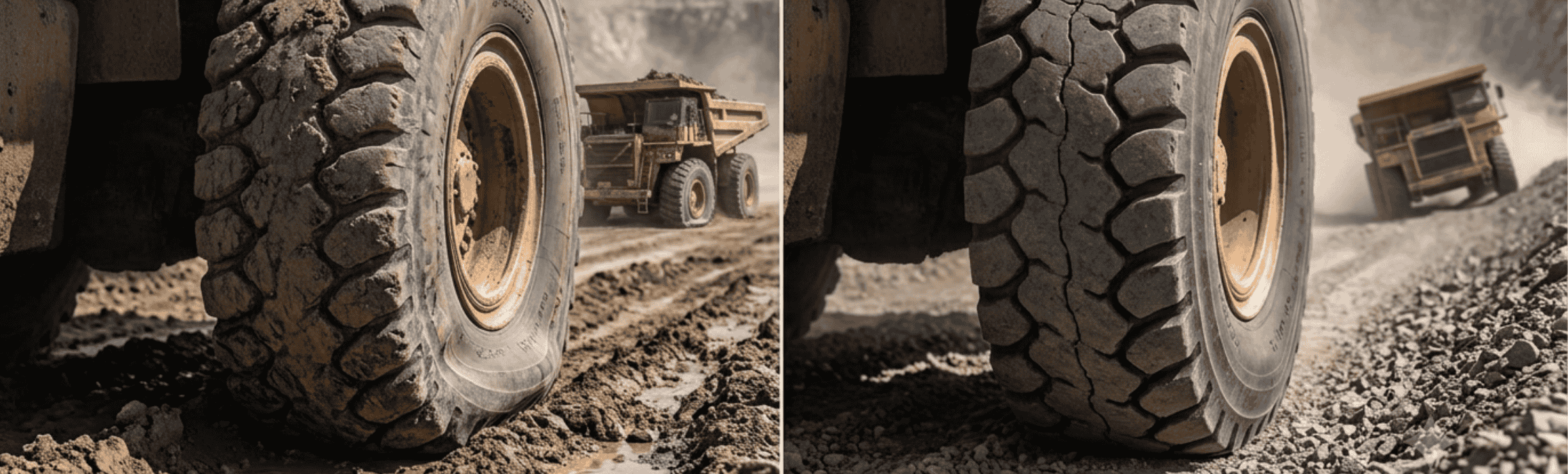
Incorrect tyre inflation increases heavy equipment operating expenses by causing premature tread wear, elevated fuel consumption, and sudden structural failures. Deviating from the manufacturer’s recommended pressure alters the tyre's ground contact area, which accelerates mechanical degradation and compounds total OTR tyre maintenance costs.
Managing inflation pressure across your fleet directly prevents unpredictable OTR tyre failure operational downtime. Premium off-the-road components, like CEAT Specialty tyres, are engineered to distribute heavy loads evenly, but they require strict pressure management to maintain performance.
This guide breaks down the hidden financial penalties of under-inflation and over-inflation, providing actionable metrics to optimise fleet efficiency.
Tyre Inflation’s Financial Impact
Incorrect tyre pressure reduces OTR and agricultural tyre service life by up to 25% while increasing fleet fuel consumption by 3% to 5%.
- Under-inflation: Causes excessive sidewall flexing, internal heat buildup, casing separation, and high rolling resistance.
- Over-inflation: Distributes load exclusively to the center tread, accelerating centerline wear and increasing susceptibility to impact punctures.
- Downtime Penalty: Unscheduled field or site failures create cascade delays, where a single tyre failure idles primary machinery and supporting logistics.
What Are the Hidden OTR Tyre Maintenance Costs of Under-Inflation?
Under-inflation occurs when an off-road or agricultural tyre lacks the internal air pressure required to support its assigned mechanical load. Without adequate structural support from air volume, the tyre's physical shape deforms under heavy equipment weight.
Accelerated Tread and Casing Damage
When air pressure drops below recommended specifications, the tyre's contact patch shifts toward the outer edges, or shoulders. This uneven footprint causes rapid shoulder wear while causing the sidewalls to flex excessively during operation.
This flexing produces severe internal thermal stress. High operational temperatures break down the chemical bonds between rubber layers, resulting in ply separation, casing fatigue, and sidewall cracking.
Increased Fuel Consumption
Operating under-inflated agricultural tyres increases the tyre's rolling resistance. Because the rubber footprint deflates and drags against the ground surface, the machine's engine must work harder to maintain speed. These inefficiencies increase fuel consumption by 3% to 5%, directly raising daily operational costs.
How Does Over-Inflation Drive Up OTR Tyre Failure Operational Downtime?
Over-inflation occurs when tyres are filled beyond the manufacturer's specified pressure for a given load and speed. This excessive pressure stiffens the tyre structure, reducing its ability to absorb ground impacts.
High Susceptibility to Impact Punctures
An over-inflated OTR tyre lacks elasticity. When a rigid tyre rolls over sharp rocks, stumps, or hard debris, the tread carcass cannot deflect around the obstacle. Instead of absorbing the object, the highly stressed rubber punctures or fractures, causing immediate OTR tyre failure operational downtime.
Centerline Tread Wear and Traction Loss
Excessive pressure causes the tyre's casing to balloon, lifting the shoulders away from the ground. The machine's entire weight concentrates on a narrow strip along the center of the tread.
This concentrated load creates specific operational issues:
- Rapid Center Wear: The center lugs wear down prematurely, requiring early tyre replacement.
- Traction Loss: The reduced contact patch causes wheel slippage, especially in wet or muddy agricultural environments, extending cycle times.
- Soil Compaction: In farming applications, the concentrated high pressure crushes soil pore structures, damaging crop root development.
Under-Inflation vs. Over-Inflation Cost Comparison
The operational consequences of poor pressure maintenance vary depending on whether the tyre is under-inflated or over-inflated. The following matrix compares how each condition damages fleet infrastructure.
| Operational Vector | Under-Inflation Impacts | Over-Inflation Impacts |
Primary Carcass Wear Zone | Outer shoulders and interior plies | Centerline tread area only |
Internal Thermal Profile | Extreme heat buildup via sidewall flexing | Normal to low internal running heat |
Puncture Vulnerability | High bead slipping and pinching risks | High carcass fractures and rock cuts |
Fuel Efficiency Impact | Reduces fuel efficiency via rolling resistance | Negligible fuel impact; increases slip |
Structural Integrity | Causes internal layer separation | Causes rigid carcass burst failures |
What Maintenance Strategies Reduce OTR Tyre Costs?
Maximising the tractor tyre service life of specialised industrial rubber, such as CEAT Specialty tyres, requires an established, data-driven inflation program. Implementing systematic checks prevents premature casing failures.
1. Match Pressure Directly to Actual Axle Loads
Never use a generic fleet inflation value. Weigh your machinery under full operational load configurations, including heavy attachments or full payloads. Utilise the manufacturer's load-and-inflation tables to identify the precise optimal pressure for that specific weight.
2. Implement Cold Pressure Measurement Protocols
Tyre pressure must always be checked and adjusted when the tyre is completely cold before the machinery begins operation. Running tyres experience a natural pressure increase due to operational heat buildup. Checking hot tyres leads to incorrect pressure adjustments.
3. Deploy Digital Tyre Pressure Monitoring Systems (TPMS)
Install valve-stem or internal rim sensors to track real-time temperature and pressure data. Automated alerts notify operators of slow leaks or sudden pressure drops before structural damage occurs, preventing costly field failures.