ceat-speciality:blogs-tags/all,ceat-speciality:blogs-tags/tyre-advice
Tractor Tyre Size Misconceptions: Common Mistakes Owners Make
Thu, 30 Apr 2026 | PRODUCTS


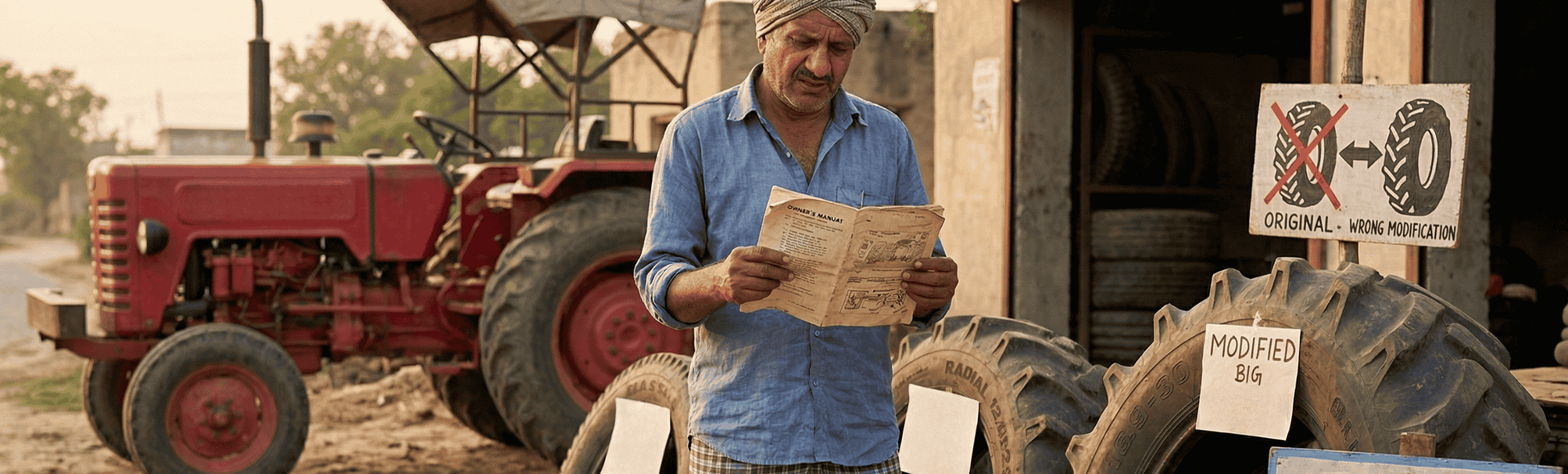
Most tractor owners focus heavily on engine horsepower, fuel quality, or implements but overlook one critical factor: tyre size. The truth is, even a powerful tractor can underperform if the tractor tyre size is wrong. Choosing incorrectly doesn’t just affect traction it leads to fuel wastage, soil damage, and long-term mechanical stress.
Many of these issues arise from simple misunderstandings.
In this blog, we’ll break down the most common tractor tyre size mistakes, the misconceptions behind them, and how to avoid costly errors.
The Hidden Costs of Choosing the Wrong Tyre Size
1. Reduced Traction and Increased Slippage
2. Soil Compaction and Field Damage
3. Load Capacity and Productivity Loss
4. Safety and Stability Risks
Common Misconceptions About Tractor Tyre Size
Let’s address some widely believed myths:
- Bigger tyres always mean better performance
- All tyre sizes are interchangeable
- Matching neighbour’s tyre setup is safe
- Front and rear tyre sizes don’t need coordination
These misconceptions often lead to serious wrong tractor tyre size problems that impact both performance and cost.
Optimising Your Tractor’s Performance Through Proper Sizing
1. Choose Tractor Tyres Based on Application, Not Just Tractor Power
Different farming activities require different tyre characteristics:
- For fieldwork, use wider tyres for traction.
- For Transport, utilise balanced size for stability
Avoid selecting tyres based only on horsepower.
2. Understand Tyre Size Markings
A common issue is confusion between metric and imperial sizing. Both may look similar but are not always exact equivalents. Understanding these markings is key to selecting the correct size.
For example:
- 16.9-28 (imperial)
- 420/85R28 (metric)
3. Maintain Proper Front-to-Rear Ratio (Especially for 4WD)
In 4WD tractors, incorrect tyre size combinations can damage the drivetrain.
Always ensure:
- Proper rolling circumference
- Manufacturer-recommended ratios
Ignoring this can lead to long-term mechanical failure.
4. Consider Wider Tyres for Better Efficiency
Modern wider tyres:
- Carry more load at lower pressure
- Improve traction
- Reduce soil compaction
This makes them a better long-term investment for most farming conditions.
Rounding off…
Tractor tyre size is not just a specification, it’s a critical factor that influences your tractor’s overall performance, efficiency, and lifespan.
Avoiding common misconceptions and understanding the real impact of sizing can help you:
- Save fuel
- Improve productivity
- Protect your soil
- Enhance safety
By making informed decisions, you can avoid costly errors and get the best out of your machine. Following a reliable tractor tyre size guide is the first step toward smarter farming.