


ceat-speciality:blogs-tags/all,ceat-speciality:blogs-tags/tyre-care
Tractor Tyre Maintenance Strategies That Save Time and Money
Tue, 12 May 2026 | PRODUCTS


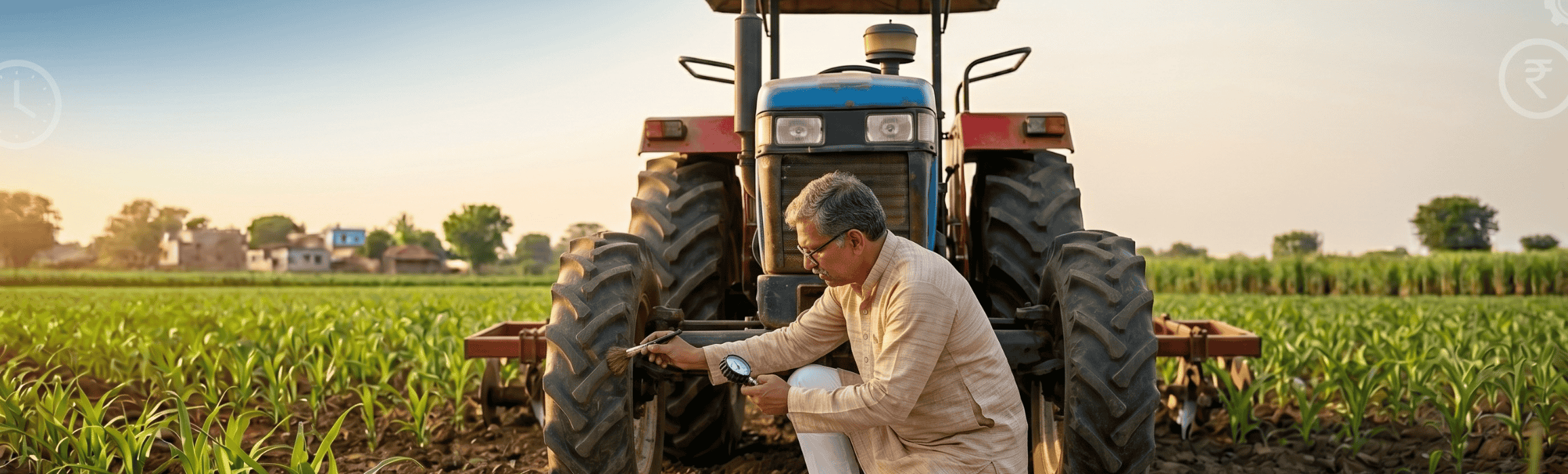
Every year thousands of farmers lose significant revenue not because of poor crop yields, but due to preventable equipment downtime. Your tractor tyres are the only point of contact between your machine and the earth which means they are the literal foundation of your farming efficiency.
In 2026, the tractor tyre price in India reflects a market driven by advanced tyre technology and rising raw material costs. With a high-quality tractor tyre in India typically ranging between ₹12,000 and ₹60,000, depending on size, ply rating, and application. Protecting your investment is no longer optional, it’s a financial necessity.
This guide provides an expert blueprint for tractor tyre maintenance strategies that will maximise your ROI and minimise field delays.
1. Precision Inflation: The 10% Rule
Air pressure is the most critical factor in tractor tyre longevity. In 2026, precision is the name of the game.
- The Cost of Neglect: Running a tyre just 10% under-inflated can reduce its service life by 15%.
- The Efficiency Gap: Over-inflation leads to excessive slippage and fuel waste, while under-inflation causes the sidewall to lose its structure and develop internal heat buildup.
- Expert Tip: Always adjust pressure based on the task. Road haulage requires higher pressure to reduce rolling resistance, while field operations benefit from lower pressure to increase the footprint and reduce soil compaction.
2. Strategic Ballasting for Traction Control
Load management is often overlooked, but it’s essential for balancing power and grip.
- Water Ballasting: A common practice in India to lower the center of gravity and increase traction. Ensure you use an anti-freeze agent if you are in high-altitude northern regions.
- Cast Iron Weights: These are easier to remove than water ballast. If you are moving from heavy plowing to light haulage, remove the weights. Carrying unnecessary weight increases tyre wear and fuel consumption.
3. Spotting Irregular Wear Patterns
Expert operators read their tyres like a book. If you notice uneven wear, your tractor is trying to tell you something:
- One-sided Wear: This usually indicates a wheel alignment issue. In India's rugged terrain, alignment should be checked every 7,000 km or after heavy seasonal work.
- Centre Tread Wear: A classic sign of chronic over-inflation.
- Heel-and-Toe Wear: Often seen on front tyres during heavy road use; rotating your tyres from left to right can help level this out.
4. Investing in the Right Tractor Tyre: Top Picks for 2026
Maintenance starts with purchasing the best tractor tyres for farming. In the Indian market, bias-ply tyres remain the preferred choice due to their rugged construction, stronger sidewalls, and better resistance to cuts and impacts on rough agricultural terrain, making them reliable and cost-effective for most farming conditions.
| Tractor Tyre Model | Tyre Type | Application | Key Construction Features | Traction Design | Durability Features | Special Capabilities | Typical Use Case |
Puddle X3 | Bias (Cross-ply) | Wetland / Paddy | Reinforced carcass | Deep lugs, open & angled shoulder lugs | Strong casing for longer service life | High lug overlap for stability | Muddy & waterlogged farming |
Bias (Cross-ply) | Rear tractor tyre | Strong nylon carcass (typical bias build) | Optimized tread for grip | Even load distribution | Balanced traction + stability | General field operations | |
Bias (Cross-ply) | Rear / multi-purpose | Robust bias construction | High traction tread | Long tyre life, self-cleaning | Resistance to field debris | Mixed farming + haulage | |
Aayushmaan HD | Bias (Cross-ply) | Heavy-duty farming | Reinforced carcass & sidewalls | Aggressive lug pattern | Wear & tear resistant | Built for demanding conditions | Heavy loads, rough terrain |
Expert Insight: For farmers prioritising soil health and long-term savings, CEAT Specialty tyres have emerged as a 2026 leader by introducing technology and designs that improve self-cleaning by reducing the time you spend scraping mud and increasing your productivity time.
5. Storage and Chemical Protection
Tractor tyres don’t just wear out from use; they degrade from exposure.'
- UV Protection: Sunlight breaks down rubber compounds. When not in use, park your tractor in the shade or use UV-blocking covers.
- Chemical Hazards: After applying fertilisers or pesticides, wash your tyres. Residual chemicals can be corrosive to the rubber over time.
- Off-Season: If the tractor will be stationary for months, slightly increase the pressure to prevent flatness and store it on a dry, wooden surface if possible.
Summary: Your 5-Minute Weekly Tractor Tyre Checklist
We recommend a ‘Sunday Inspection’ to save time and money on your tractor tyre maintenance.
1. Check Pressure: Use a calibrated gauge (don't just kick the tyre).
2. Visual Scan: Look for cuts, bulges, or embedded stones/nails.
3. Clean the Lugs: Remove packed mud or debris to ensure the self-cleaning action works on Monday morning.
4. Check Valve Caps: Ensure they are tight to prevent slow leaks.
By treating your tyres as a high-value asset rather than a consumable, you ensure your farm stays productive and your overheads stay low.


