


ceat-speciality:blogs-tags/all,ceat-speciality:blogs-tags/tyre-advice
Tyre Size vs Performance: What Each Number Really Means on Road & Off-Road Tyres
Mon, 4 May 2026 | PRODUCTS


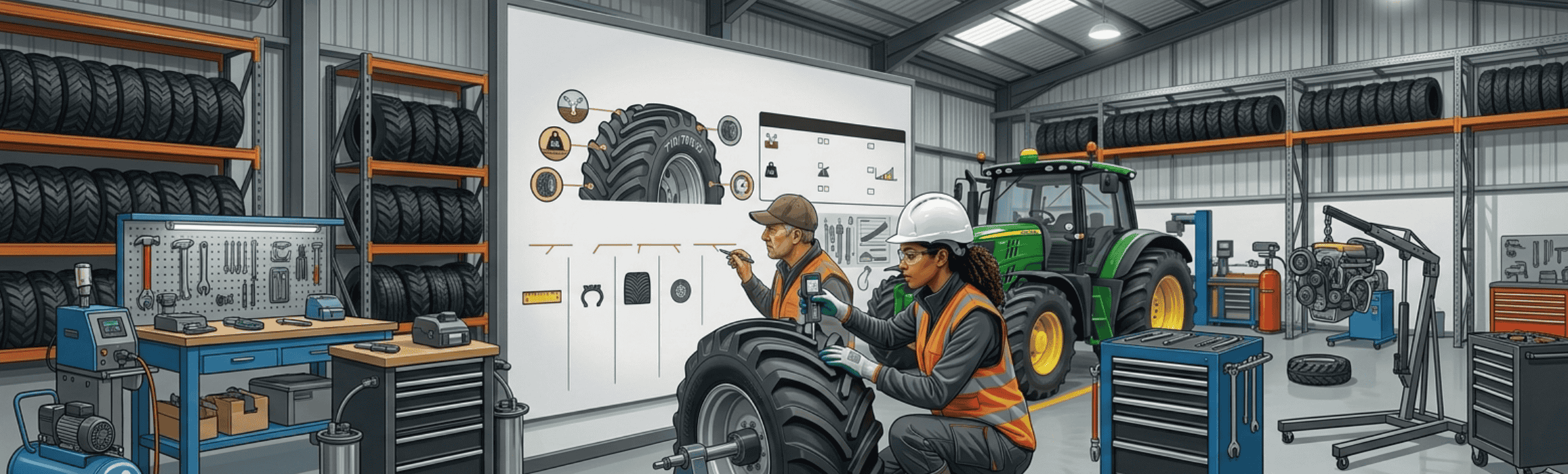
Understanding tyre sidewall markings is more than just a technical necessity, it is the foundation of vehicle safety, fuel efficiency, and operational productivity. Whether you are managing an array of heavy-duty construction equipment or optimising a high-performance road vehicle, the alphanumeric code on your tyre is a full proof blueprint of its capabilities.
With decades in specialty tyre engineering, CEAT Specialty tyres have compiled this definitive guide to decoding tyre sizes and understanding how these metrics dictate performance across diverse terrains.
1. Decoding the Sidewall: Tyre Size Explained
Every number and letter on a tyre sidewall represents a specific physical or functional attribute. Let’s break down a standard metric marking of Torquemax VF580/85R42 tyres'
- VF (Very High Flexion): VF tyres can operate at significantly lower pressures while carrying the same load.
- Section Width (580): The first number is the width of the tyre in millimeters from sidewall to sidewall.
- Aspect Ratio (85): This is the height of the sidewall expressed as a percentage of the section width. A higher aspect ratio (e.g., 85) typically means a taller sidewall, which provides better shock absorption, crucial for offroad agricultural and construction use.
- Construction Type (R): 'R' stands for Radial. Unlike Bias-ply tyres, Radial tyres have cord plies at 90 degrees to the direction of travel, offering better heat distribution and a larger footprint.
- Rim Diameter (42): The diameter of the wheel rim in inches.
2. Tyre Load Index vs. Speed Rating: The Performance Limiters
Two of the most critical markings for safety and longevity are the Load Index and Speed Rating. These define the capacity in which the tyre can safely operate.
What is the Tyre Load Index?
The load index is a numerical code that represents the maximum weight a tyre can carry at the speed indicated by its speed symbol.
- The Risk of Overloading: Exceeding this limit causes excessive heat build-up and structural fatigue. In industrial settings, using a tyre with an insufficient load index leads to premature wear and potential sidewall 'zipper' failures.
What is the Speed Rating?
Represented by a letter (e.g., A8, B, or D), this indicates the maximum speed the tyre can sustain under its rated load.
- For Off-Road (OTR): You might see A8 (40 km/h).
Pro-Tip: Always match your tyre’s load/speed index to your actual peak operating conditions. At CEAT Specialty, we recommend checking the technical data sheets to ensure your equipment's weight, including attachments and cargo, falls within the safe index range.
3. Off-Road vs. On-Road Tyres: Terrain-Specific Engineering
The numbers remain the same, but the physics changes based on where the tyre meets the ground.
| Feature | On-Road (High Speed/Industrial) | Off-Road (Agriculture/Mining) |
Tread Depth | Shallower for heat reduction and stability. | Deeper (Lugs) for maximum mechanical 'bite'. |
Footprint | Narrower to reduce rolling resistance. | Wider (Flotation) to prevent soil compaction. |
Sidewall | Stiffer for cornering and stability. | Flexible for shock absorption and traction. |
The 'Flotation' Factor in Off-Roading
For agricultural applications, the aspect ratio and section width are vital for flotation. A wider tyre (higher section width) with a flexible radial sidewall allows for a larger contact patch. This distributes the vehicle's weight over a greater area, protecting soil health and increasing traction in muddy conditions.
4. Why Construction & Tread Patterns Matter
Performance is not just about size; it's about the Tread Pattern Code. In the OTR (Off-the-Road) world, these are standardised:
- E (Earthmover): Designed for transport (e.g., scrapers).
- L (Loader/Dozer): Built for traction and rock protection.
- G (Grader): Focused on directional stability.
An open tread pattern is superior for self-cleaning in wet, loose soil, whereas a closed tread pattern (high rubber-to-void ratio) is necessary for abrasive surfaces like concrete or jagged rock in mining.
5. Maintenance: Protecting Your Investment
To ensure the performance promised by those sidewall numbers, you must maintain Optimal Tyre Pressure.
1. Under-inflation: Leads to excessive sidewall flexing, heat build-up, and 'rim slip.'
2. Over-inflation: Reduces the contact patch, leading to uneven tread wear and higher susceptibility to impact damage.
The CEAT Specialty tyres, such as the Farmax agri tyres or Tyrock industrial tyre series, are engineered with advanced compounds that offer superior resistance to cuts and punctures, even when operating at the limits of their load index.


