ceat-speciality:blogs-tags/all,ceat-speciality:blogs-tags/agriculture
All About Farm Tyres: How Lower Soil Compaction Saves Fuel & Increases Yield
Sun, 10 May 2026 | PRODUCTS


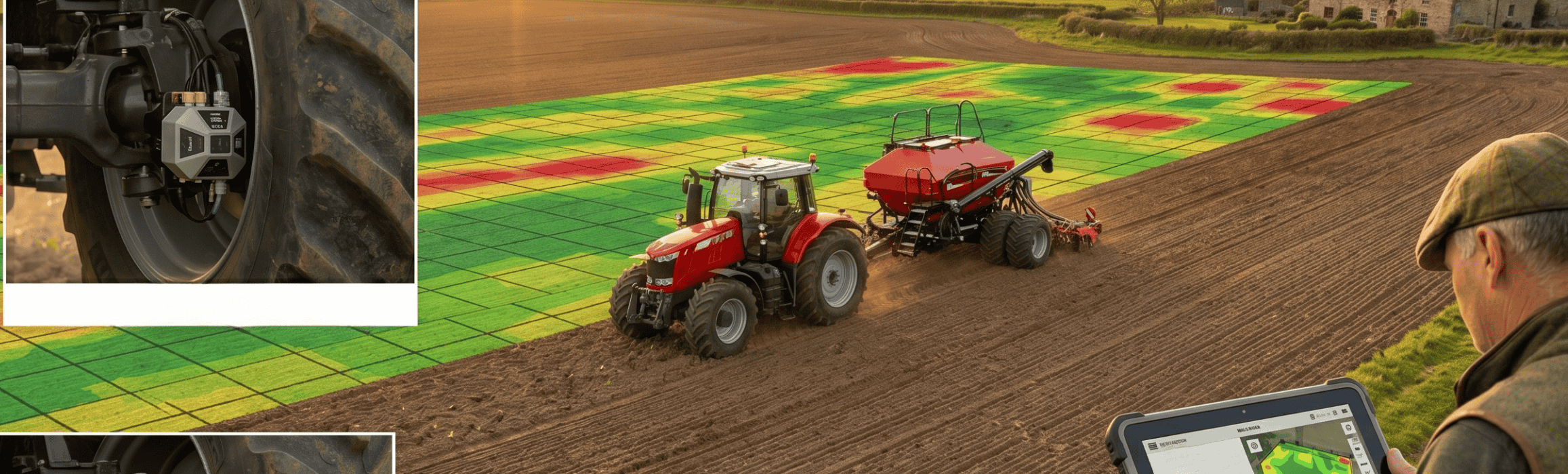
The relationship between your tractor’s footprint and your bottom line is direct. High-performance agricultural tyres in the UK are no longer just rubber, they are precision tools designed to mitigate soil compaction. By adopting low-pressure technology, farmers can reduce fuel consumption by up to 7% per hectare, minimise wheel slip, and protect soil structure to prevent yield losses that can reach 25% in severely compacted fields.
Understanding the Science: Soil Compaction vs. Yield
Soil compaction is a hidden thief. When heavy machinery traverses a field, the pressure compresses the soil pores, squeezing out the air and water necessary for microbial life and root expansion. The following are the impacts of soil compaction on fields:
- Root Restriction: Compacted layers act as a physical barrier. Instead of growing deep to access nutrients, roots grow horizontally, leaving crops vulnerable to drought.
- Water Management: Compacted fields prevent drainage, leading to waterlogging in winter and rapid runoff during heavy rains- a common challenge for those managing heavy clay soils.
- Nutrient Lock: Without adequate pore space, the biological conversion of nitrogen and phosphorus slows down, meaning you get less advantage from the fertilizers.
The Economic Impact: Fuel Efficiency and Traction
Slipping on fields is wasted energy, directly impacting the farming productivity. Every time your tyres spin without moving the tractor forward, you are burning fuel and money together.
1. Reduced Rolling Resistance
A hard, over-inflated farm tyre sinks deeper into soft soil, effectively making the tractor climb out of a rut constantly. Fuel efficient tractor tyres, particularly radials, create a longer, flatter footprint. This lowers the rolling resistance.
2. Maximizing Traction
By increasing the footprint, more lugs engage with the soil simultaneously.
- Standard Radial: Good for general utility.
- VF (Very High Flexibility) Tyres: Can carry 40% more load at the same pressure, or the same load at 40% lower pressure compared to standard radials.
What we recommend is switching to low-pressure VF tyres to improve traction by nearly 2% per hour, which translates to finishing jobs faster and reducing engine hours.
Choosing the Best Agricultural Tyres for Heavy Clay Soils
Clay soils in the UK are notorious: they turn slippery when wet and hard when dry. To master this terrain, your agricultural tyre choice must prioritise self-cleaning and flotation.
| Feature | Importance for Clay Soils | Recommended Tech |
Lug Angle | Sharp angles (approx. 45°) slice through mud for grip. | |
Self-Cleaning | Prevents slicking where mud fills the tread. | Specialised Mud-Breaker lugs |
Flexibility | Allows the tyre to adjust according to increasing surface area. | VF or IF Technology |
For farmers in the UK dealing with heavy clay, the CEAT Specialty Farmax R2 and Torquemax VF series are engineered specifically for high-torque applications where soil protection is non-negotiable.
CEAT Specialty Farm Tyres: The Expert’s Choice
As an industry leader, CEAT Specialty farm tyres have redefined the balance between durability and soil care. Their radial range is built with a unique dual angle lug design that maximises grip while ensuring a smooth ride on the road.
Why we recommend CEAT Specialty for 2026 operations:
- Advanced Rubber Compounds: Designed to resist stubble damage and provide long service life even in abrasive conditions.
- Superior Flotation: Their radial construction ensures weight is distributed evenly, preventing the deep ruts that lead to long-term soil damage.
- Optimised Inner Volume: Larger air volumes allow for lower operating pressures without risking sidewall failure.
Final Thoughts
Investing in the right tractor tyre is an investment in your land's future. By selecting fuel efficient tractor tyres like those from the CEAT Specialty range, you aren't just buying equipment; you are securing a more sustainable, profitable harvest.