


ceat-speciality:blogs-tags/all,ceat-speciality:blogs-tags/tire-advice
Track vs Tyre Soil Compaction: The Physics of the Power of CTR Explained
Sun, 9 Aug 2026 | PRODUCTS


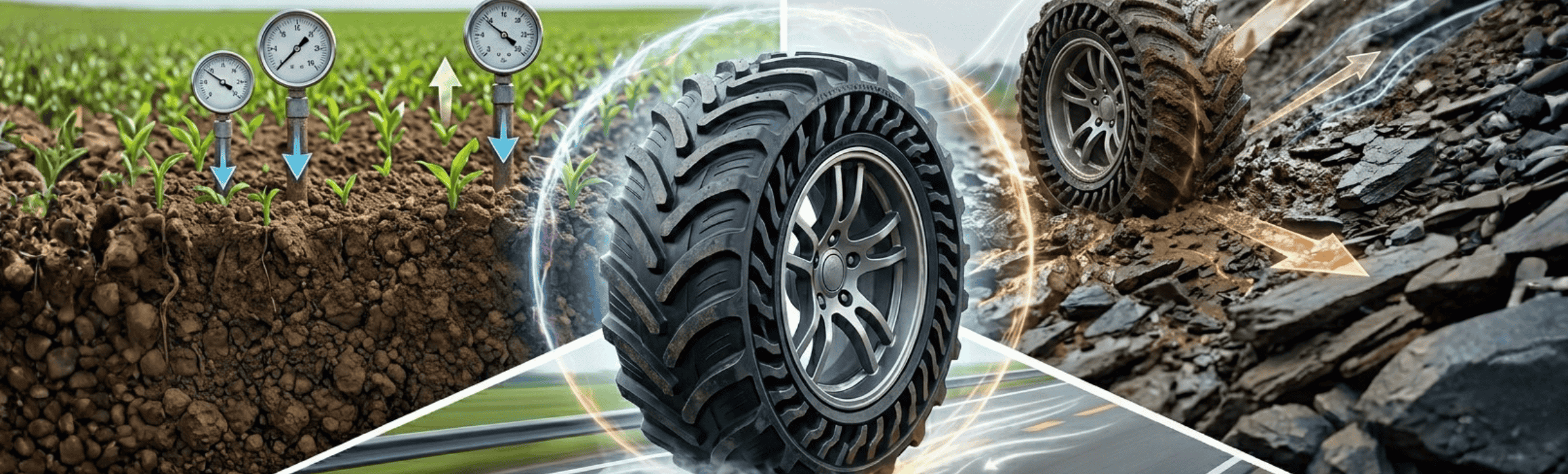
Modern agricultural productivity relies on heavy machinery, but the mechanical stress of this equipment threatens soil health. Understanding the physics of track vs tyre soil compaction is essential for farmers seeking to minimise yield loss while maximising field efficiency. The choice between tracks and advanced tyres heavily dictates how weight is distributed across agricultural land.
CEAT Specialty tyres address this challenge through the "Power of CTR"- an engineering framework balancing Compaction, Traction, and Roadability. By leveraging advanced material science and flexible sidewall physics, these tractor tyres match or exceed the performance of tracks in critical agricultural metrics.
This article analyses the soil mechanics, friction physics, and transport dynamics that make CTR technology a superior alternative to traditional track and tyre designs.
The physics of the "Power of CTR" relies on maximising the contact patch area to reduce ground pressure, optimizing tread profile geometry for shear stress transfer, and using flexible compounds to absorb transport harmonics. This allows CEAT Specialty tyres to deliver low compaction, high traction, and high roadability simultaneously.
- Low Compaction: Flexible VF (Very High Flexion) casings distribute vehicle weight evenly, reducing deep-layer soil stress.
- High Traction: Optimised lug geometry maximises horizontal shear strength in the soil, converting engine torque into forward thrust with minimal slip.
- High Roadability: Advanced rubber compounds and continuous center lug designs damp high-frequency vibrations during road transport.
What Is the Physics Behind Track vs Tyre Soil Compaction?
The primary physical mechanism driving soil compaction is vertical stress distribution. While rubber tracks distribute weight over a long, narrow rectangle, traditional tyres historically created a smaller, oval footprint, leading to higher peak pressures. However, modern CEAT Specialty tyres utilise Very High Flexion (VF) technology. This engineering allows the tyre to operate at 40% lower inflation pressure compared to standard radial tyres while carrying the same load, stretching the footprint to match the surface area of a track.
Key Differences in Ground Pressure Distribution
- Peak Pressure Points: Tracks feature localized pressure spikes directly beneath their internal roller wheels. VF tyres distribute weight uniformly across the entire contact patch.
- Soil Shear Strain: Tyres exhibit dynamic flexing, which minimizes the lateral shear strain on the soil surface compared to the rigid turning motion of tracks.
- Subsoil Stress: Low-pressure tractor tyres limit compaction to the topsoil layer, preventing deep subsoil degradation that restricts root penetration.
| Metric | Standard Radial Tyre | CEAT Specialty VF Tractor Tyre | Rubber Track System |
Operating Pressure | High | Low | Constant Mechanical Equivalent |
Footprint Geometry | Short Oval | Long, Wide Rectangle | Ultra-Long Narrow Strip |
Pressure Uniformity | Poor (High Center Stress) | Excellent (Evenly Distributed) | Poor (Spikes Under Rollers) |
Mechanics of Low Compaction in CEAT Specialty Agricultural Tyres
1. High-Flex Sidewalls: Engineered rubber compounds permit extreme sidewall bulging without structural fatigue, maximising the footprint length.
2. Increased Lug Contact Area: The tread pattern puts more rubber in contact with the ground, reducing the force per square inch exerted on the crop roots.
3. Flexible Carcass Architecture: The tyre carcass molds around surface irregularities rather than crushing them, maintaining soil porosity.
Why Does High Roadability Matter for Modern Tractor Tyres?
Roadability defines an agricultural machinery's efficiency, stability, and safety during road transit between fields. While track systems suffer from high friction, severe vibration, and rapid wear on paved roads, optimised tractor tyres excel due to elastomer damping properties.
The physics of roadability focuses on resonant frequency and rolling resistance. High rolling resistance increases fuel consumption, while uncontrolled harmonic vibrations cause operator fatigue and mechanical wear.
Roadability Optimisation Factors
- Continuous Center Tread Path: Overlapping center lugs ensure continuous rubber-to-road contact, removing the rhythmic thumping common with agricultural tread patrns.
- Advanced Rubber Polymers: High-density, abrasion-resistant compounds resist the high thermal stresses generated during high-speed road travel (up to 65 km/h).
- Low Rolling Resistance: Radial construction minimises internal friction and casing deformation on hard surfaces, reducing fuel consumption during transport.


