


ceat-speciality:blogs-tags/all,ceat-speciality:blogs-tags/tyre-advice
Spring 2026 Tractor Checklist: Optimising Ballast and Tyre Pressure to Minimise Grassland Compaction
Thu, 11 Jun 2026 | PRODUCTS


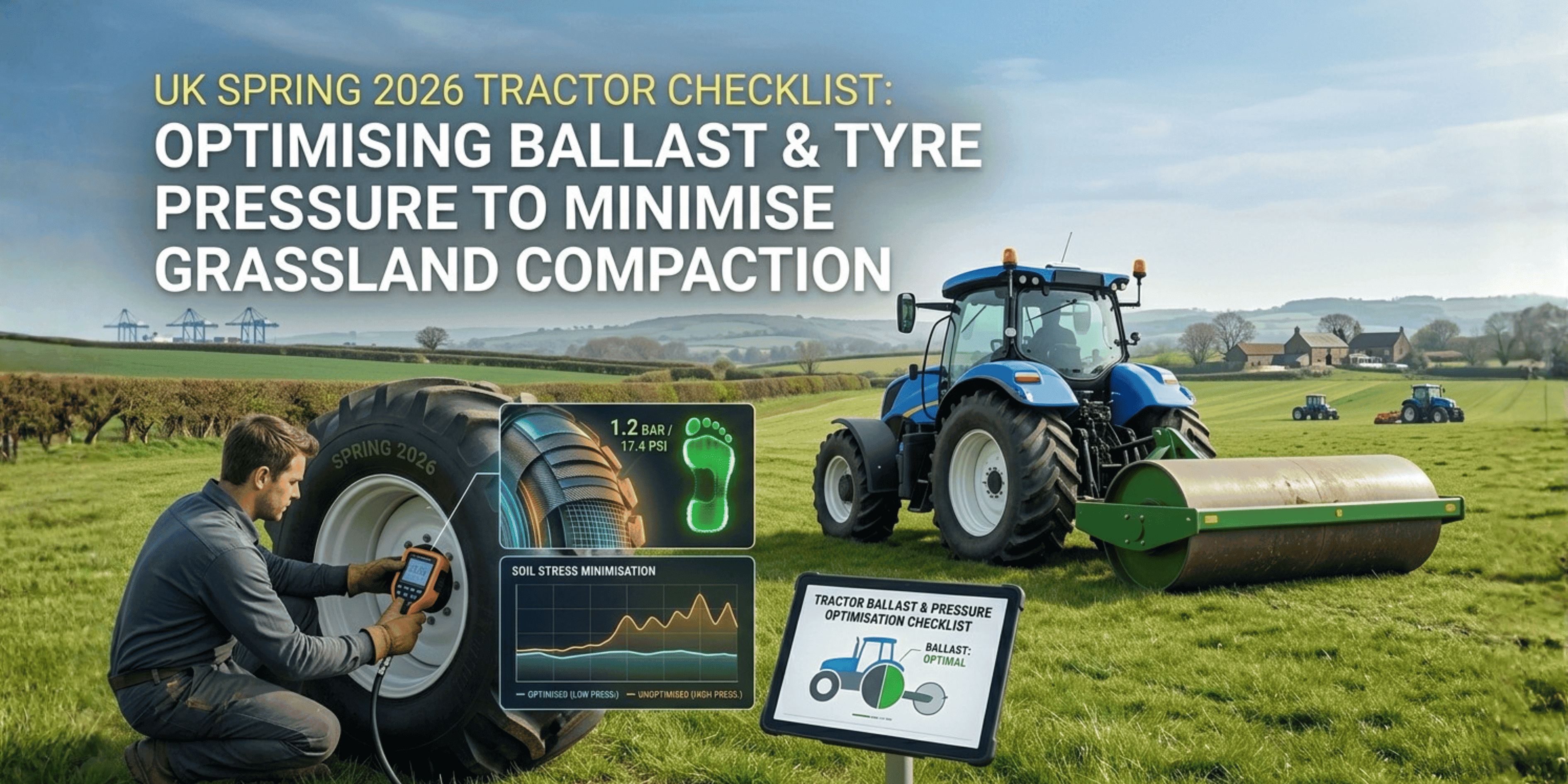
Table of Contents
- Why is a spring tractor checklist 2026 vital for grassland management?
- Key Benefits of a Spring Field Assessment:
- How do you balance tractor ballast for spring fieldwork?
- What is the definitive tractor tyre pressure guide for soft soil?
- Why are CEAT Specialty tyres considered the best tractor tyres for compaction control?
Spring 2026 demands immediate action to protect vulnerable silage and grazing fields from heavy machinery damage. Soil compaction reduces root development, restricts water infiltration, and severely lowers seasonal forage yields. Completing a targeted maintenance routine ensures your machinery is field-ready.
Implementing a structured spring tractor checklist 2026 ensures machinery operates at peak efficiency. Properly managing ballast and selecting advanced CEAT Specialty tyres directly protects your topsoil. Adjusting equipment configurations creates a sustainable, high-yield grassland environment.
This technical guide delivers clear, actionable protocols for calculating operational weight distributions. It provides precise pressure adjustments designed to eliminate deep-tissue soil rutting.
Optimising your tractor for spring fieldwork requires a balance between total machine weight and tyre inflation. To minimise grassland soil compaction, operators must calculate the exact axle load, adjust tyre pressures to the minimum safe PSI for the field speed, and utilise advanced VF (Very High Flexion) radial technology.
- Check Weight Distribution: Ensure a 40:60 front-to-rear weight split for standard four-wheel-drive field tasks.
- Lower Inflation Pressures: Reduce tyre pressure to the lowest allowable manufacturer setting for low-speed fieldwork.
- Deploy VF Technology: Use best tractor tyres like the CEAT Specialty Torquemax tyre to carry high loads at 40% lower pressures.
- Remove Excess Ballast: Strip away front and wheel weights when switching from heavy draft work to light grassland applications.
Why is a spring tractor checklist 2026 vital for grassland management?
Unchecked machinery weight damages soil structure, increases fuel consumption, and permanently degrades root zones. A structured checklist establishes standard operating parameters before tractors enter soft spring pastures. It helps operators implement automated field checks that stop compaction before it starts.
Grassland soils are uniquely susceptible to structural damage early in the season due to high moisture retention. Heavy machinery operating with incorrect configurations shears root systems and compresses vital pore spaces. This compression starves the soil of oxygen, blocks nutrient uptake, and restricts water drainage.
Key Benefits of a Spring Field Assessment:
- Preserves Yield Potential: Eliminates compacted zones that stunt grass regrowth and silage yields.
- Enhanges Fuel Efficiency: Reduces tyre slip and rolling resistance in loose or wet soil.
- Extends Asset Lifespan: Decreases mechanical wear on axles, transmissions, and tyre casings.
How do you balance tractor ballast for spring fieldwork?
Proper ballasting matches machine weight to the specific draught or transport requirement of the implement. Correctly distributed ballast prevents excessive tyre slip while eliminating unnecessary weight that crushes soil structure.
Step-by-Step Ballast Calculation Protocol
1. Weigh the Tractor: Position the tractor on a calibrated weighbridge to capture unladen front and rear axle weights.
2. Calculate Implement Loads: Attach the spring implement and measure the total static weight distribution across both axles.
3. Verify Axle Distribution Ratios: Ensure your configuration matches the required operating distribution for your tractor configuration.
| Tractor Configuration | Front Axle Weight % | Rear Axle Weight % |
Mechanical Front-Wheel Assist (MFWD) | 40% | 60% |
Four-Wheel Drive (4WD) Equal Tyres | 55% | 45% |
Rear-Wheel Drive Only (2WD) | 25% | 75% |
4. Add or Remove Weights: Install suitcase weights on the front carrier or wheel weights to hit target ratios. Remove them immediately when moving to lighter grassland operations.
What is the definitive tractor tyre pressure guide for soft soil?
Operating with correct inflation values maximises the tyre footprint, spreading machine weight across a larger surface area. This distribution drastically lowers ground pressure, providing effective agricultural soil compaction solutions.
Operators must consult a technical tractor tyre pressure guide before adjusting inflation levels. Running field operations at high road inflation pressures creates narrow, deep ruts that destroy grass swards. Conversely, under-inflating causes bead slipping, sidewall buckling, and premature tyre failure.
Why are CEAT Specialty tyres considered the best tractor tyres for compaction control?
Modern tyre design utilises flexible rubber compounds and advanced casing architectures to protect delicate topsoil. Selecting premium, technically advanced radial tyres remains the most reliable long-term solution for safeguarding agricultural land.
CEAT Specialty tyres incorporate advanced carcass technology that allows maximum sidewall deflection without structural failure. This engineering maximizes the tyre's contact area, ensuring uniform weight distribution across the tread footprint.
Key Performance Innovations:
- VF (Very High Flexion) Technology: VF tyres carry up to 40% more load than standard radial tyres at the same inflation pressure. Alternatively, they carry the same load at 40% lower inflation pressure.
- Optimised Lug Geometry: Dual-angle lug designs provide high tractive efficiency, minimising tyre slippage and structural surface tearing.\
- High Footprint Volume: The widened tread area disperses downward force, keeping ground pressure below the critical threshold for soil damage.


