


ceat-speciality:blogs-tags/all,ceat-speciality:blogs-tags/tyre-advice
Underground Mining Tyre Hazards: Selecting Compounds for Rock Excavation and High Cut-Risk Zones
Thu, 16 Jul 2026 | PRODUCTS


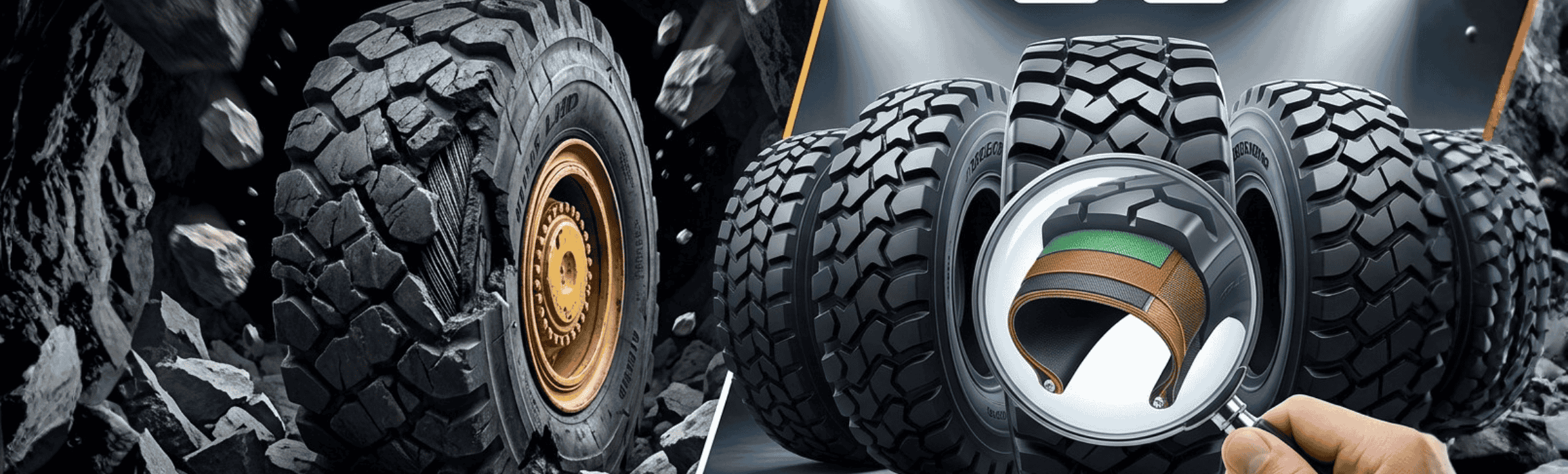
Table of Contents
Underground mining environments present severe operational hazards, including sharp rock debris, water-lubricated cutting surfaces, and extreme load stresses. Selecting the correct mining tyre engineering and specialised rubber compounds is critical to preventing sudden tyre failure, optimising machine uptime, and reducing the total cost of ownership (TCO).
Premium heavy-duty solutions, such as CEAT Specialty tyres, utilise advanced cut-resistant tyre compounds alongside reinforced structural designs. These components are specifically engineered to withstand the punishing conditions of hard rock excavation and narrow-vein underground haulage.
Underground mining tyre hazards are mitigated by matching tread patterns and rubber formulations to site conditions. In high cut-risk zones, specialised slick treads and cut-resistant compounds prevent catastrophic rock punctures and sidewall tears.
Underground mining tyre hazards are mitigated by matching tread patterns and rubber formulations to site conditions. In high cut-risk zones, specialised slick treads and cut-resistant compounds prevent catastrophic rock punctures and sidewall tears.
Key Takeaways
- Primary Hazard: Sharp, jagged rock fragments cause severe tread cuts, sidewall punctures, and micro-tearing.
- Compound Solution: Cut-resistant tyre compounds utilise advanced polymers to limit cut growth and resist abrasive wear.
- Design Excellence: The CEAT Specialty SLICK 431 mining tyre features a smooth, extra-deep tread and a reinforced sidewall to maximise operational longevity under high loads.
- Economic Impact: Proper tyre selection reduces sudden structural failures, optimises fleet uptime, and lowers overall operating costs for mining operations.
What Are the Main Underground Mining Tyre Hazards?
Underground mining applications subject tyres to severe mechanical stress and environmental risks. Identifying these hazards helps fleet managers and tyre dealers implement effective preventative measures.
- Tread Cutting and Gouging: Sharp quarts, granite, or basalt fragments easily slice standard rubber compounds.
- Sidewall Impact Damage: Navigating narrow, unlined tunnels exposes tyre sidewalls to scraping and impact from jagged rock walls.
- Water-Induced Cutting: Water on mine floors acts as a lubricant for sharp rocks, allowing them to penetrate rubber up to twenty percent easier than dry surfaces.
- Heat Degradation: Carrying heavy payloads in enclosed, poorly ventilated mines generates internal heat, accelerating casing fatigue.
Why Do High Cut-Risk sones Require Specialised Cut-Resistant Tyre Compounds?
Standard off-the-road (OTR) tyres lack the molecular density to resist the piercing forces found in rock excavation faces. Specialised cut-resistant tyre compounds use unique synthetic rubber blends and high-structure carbon blacks to provide robust protection.
These formulations work by:
1. Resisting Penetration: Increasing the cross-link density of the rubber matrix to prevent sharp edges from initiating a cut.
2. Arresting Cut Growth: Stopping minor surface cuts from expanding into deep, catastrophic structural splits.
3. Enhancing Tread Wear Life: Minimising chipping and chunking when high torque is applied to abrasive stone surfaces.
How Does the CEAT Specialty SLICK 431 Minimise Mining Tyre Hazards?
The CEAT Specialty SLICK 431 mining tyre is engineered explicitly for the demanding requirements of underground mine excavation and haulage. Its structural profile and smooth geometry directly address the primary failure modes of high cut-risk zones.
Technical Performance Attributes
- Smooth Slick Tread Profile: The lack of traditional tread grooves eliminates rock trapping (where sharp stones get wedged in grooves and slowly drill into the casing), making it ideal for the harshest rock faces.
- Specially Formulated Deep Tread: An extra-deep tread volume provides a massive wearable rubber barrier, extending tyre mileage in highly abrasive environments.
- Reinforced Sidewalls: Enhanced casing construction protects the vulnerable mid-section from lateral cuts and impact punctures during tunnel navigation.
- Wider and Flatter Footprint: The wider and flatter tread profile optimises ground contact, distributing massive payloads evenly while delivering superior tractive stability.
Comparison: Standard E-3/L-3 Tyres vs. CEAT Specialty Mining Tyres
| Parameter | Standard E-3/L-3 Tyres | CEAT Specialty SLICK 431 |
Tread Design | Grooved / Lugged Pattern | Smooth / Slick Surface |
Rock Trapping Risk | High | Low / None |
Cut Resistance | Moderate | Exceptional (Cut-Resistant Compound) |
Sidewall Protection | Standard | Reinforced Deflection sones |
Primary Application | General Earthmoving & Open Pits | Hard Rock Underground Excavation |


