


ceat-speciality:blogs-tags/all,ceat-speciality:blogs-tags/tyre-advice
What Causes Premature Wear in Skid Steer Tyres on Construction Sites and How to Prevent It?
Wed, 23 Sep 2026 | PRODUCTS


About CEAT Specialty Tyres
CEAT Specialty tyres houses a team of industry professionals dedicated to publishing accurate, well-researched and practical content on agricultural and OTR tyres. Our editorial team reviews every article for accuracy, clarity and relevance, using trusted sources and current industry best practices.
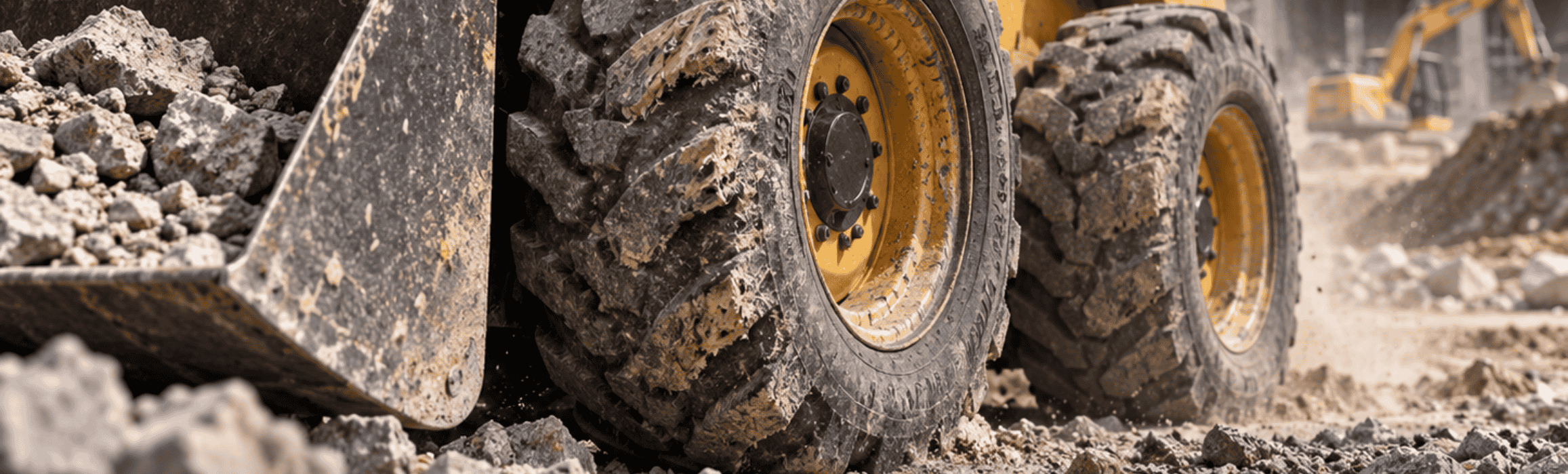
Premature wear in skid steer tyres is primarily caused by abrasive job site terrain, improper inflation pressure, aggressive operator driving habits and selecting the wrong tyre compound or tread pattern. Because skid steer loaders steer by counter-rotating or locking wheels on one side, their tyres endure intense lateral friction and scrub forces during operation.
To prevent early tyre degradation, job site managers and machine operators must enforce strict inflation checks, match tyre types (pneumatic, solid, or radial) to the surface condition and adopt smooth maneuvering techniques. Utilising heavy-duty solutions like CEAT Specialty tyres engineered with cut- and chip-resistant rubber compounds provides the structural durability needed to maximise tread life under harsh construction conditions.
Core Causes of Early Skid Steer Tyre Wear
- Surface Friction: Operating high-lug pneumatic tyres on hard concrete or asphalt.
- Inflation Errors: Over-inflation causing center tread wear; under-inflation damaging sidewalls.
- Aggressive Counter-Rotation: Fast spin-turns and sharp pivot maneuvers on abrasive debris.
- Incorrect Tyre Selection: Using soft-compound or light-duty tyres for heavy-demolition applications.
Quick Prevention Action Plan
1. Check cold tyre pressure daily against manufacturer specs.
2. Match deep-tread, heavy-ply tyres to abrasive construction environments.
3. Train operators to make wide, gradual turns rather than tight pivot spins.
4. Inspect rims and treads daily for embedded rebar, rock debris, or uneven wear.
What Causes Premature Skid Steer Tyre Wear on Job Sites?
Skid steer loader tyres degrade prematurely when environmental stress, mechanical pressure and operational missteps exceed the physical limits of the rubber compound.
Key Factors Accelerating Skid Steer Tyre Degradation
1. Abrasive Underfoot Conditions: Construction sites are filled with crushed concrete, sharp gravel, recycled aggregate and rebar. Continuous contact with raw aggregate acts like sandpaper, rapidly grinding down tyre lugs.
2. Incorrect Inflation Pressure
- Under-inflation: Causes excessive sidewall flexing, internal heat build-up and rim slipping, leading to shoulder tread scrubbing.
- Over-inflation: Reduces the tyre's contact patch, concentrating machine weight on the center of the tread. This leads to premature center wear and reduces impact absorption, making the carcass vulnerable to punctures.
3. High-Stress Steering Dynamics: Unlike front-wheel-steer machinery, skid steers turn by dragging one set of wheels while accelerating the other. This skidding motion creates severe friction. Continuous counter-rotating on hard surfaces strips rubber from the carcass in a fraction of standard operating hours.
4. Mismatching Tyre Compound to Application: Using standard-duty pneumatic tyres for heavy demolition or scrap handling leads to rapid cut propagation and chunking.
CEAT Specialty’s Premature Skid Steer Tyre Wear Causes Table
| Wear Factor | Primary Cause | Visual Indicator | Solution |
Center Tread Wear | Over-inflation | Crown of tread worn flat | Reduce pressure to recommended PSI |
Edge/Shoulder Wear | Under-inflation | Outside lugs worn, sidewalls creased | Increase pressure to recommended PSI |
Lug Chunking / Pitting | Sharp job site debris | Missing rubber blocks on tread | Upgrade to cut-resistant heavy-duty tyres |
Rapid Scrubbing | Hard-surface pivot turns | Diagonal scuff marks across lugs | Train operators on wide-arc turning |
How Long Do Skid Steer Tyres Last?
On average, standard pneumatic skid steer tyres last between 400 to 800 operating hours. However, service life varies significantly depending on tyre quality, surface severity and maintenance rigor.
- Hard-Surface Applications (Asphalt, Concrete): Approximately 300 – 600 Hours
- Mixed Construction Sites (Dirt, Gravel, Mud): Approximately 600 – 1,000 Hours
- Heavy Demolition / Scrap Yards (Solid Tyres): Approximately 1,500 – 3,000+ Hours
Selecting high-performance industrial options, such as CEAT Specialty tyres built with reinforced sidewalls and extra-deep tread depth, allows equipment fleets to hit the upper threshold of these operational baselines.
How to Prevent Premature Skid Steer Tyre Wear?
Preventing early skid steer tyre failure requires combining proper tyre selection, routine daily maintenance and modified operator habits.
1. Select the Right Tyre Construction and Tread Pattern
- Standard Pneumatic Tyres: Best for soft dirt, mud and agricultural work where traction is paramount.
- Heavy-Duty Deep-Tread Tyres: Essential for construction sites with loose rock, demanding high ply ratings and thick sidewall rim guards.
- Solid / Foam-Filled Tyres: Recommended for zero-downtime environments like scrap yards or concrete recycling sites where puncture risks are high.
2. Maintain Correct Inflation Pressures Daily
Check inflation pressures when tyres are cold using an accurate gauge. Never deflate hot tyres that have built up pressure through normal operation.
3. Implement Best Operator Practices
- Avoid Counter-Rotation on Hard Ground: Instruct operators to turn the loader while in motion (making wide arcs) rather than pivoting on a zero-turn axis while stationary.
- Manage Ground Speed: Excessive travel speed on concrete roads builds internal heat within the carcass, causing tread breakdown.
- Clear Work Routes: Regularly push sharp debris, concrete offcuts and metal scrap out of primary haul paths.
Final Thoughts
Maximising skid steer tyre service life requires managing job site hazards, maintaining correct inflation pressures and eliminating aggressive steering habits. By matching the right tyre compound and tread design to your specific operating conditions, you significantly lower cost-per-hour while preventing premature downtime.
For heavy construction, demolition and rough-terrain applications, CEAT Specialty tyres deliver engineered durability with extra-deep tread depth, robust sidewall protection and cut-resistant compounds.
Ready to reduce your equipment downtime and lower operating costs? Explore the complete line of rugged, site-tested solutions on the CEAT Specialty Skid Steer tyres.


